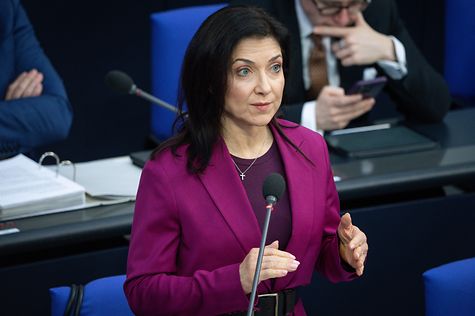
Germany’s economy is under pressure. Despite global crises, the federal government aims to defend the country’s role as a stability anchor and innovation driver – but the window of opportunity for this is small. In a parliamentary questioning on March 18, 2026, Economics Minister Katherina Reiche (CDU) identified external conflicts as the main risk. According to the parliamentary record, she stated that the growth window is only “narrow.” To maintain competitiveness, the coalition is relying on a bundle of measures: the gas storage levy was abolished, the electricity tax for commerce and agriculture was reduced to the European legal minimum. With 6.5 billion euros in subsidies, the state is lowering grid fees. The promised industrial electricity price is set to take effect retroactively from the beginning of the year.
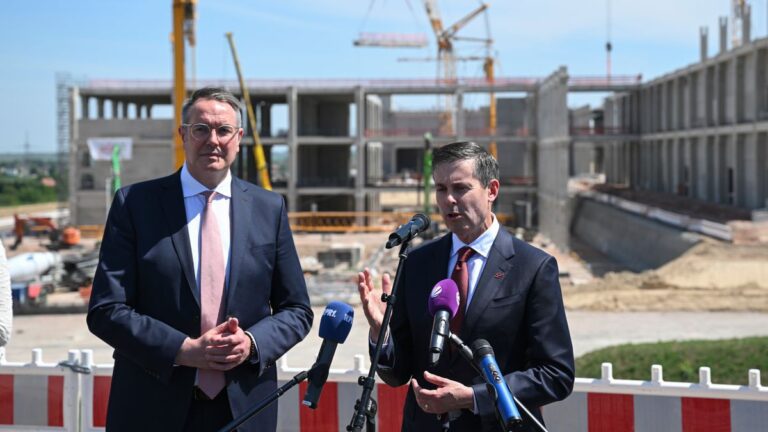
But the challenges are manifold. Transport Minister Patrick Schnieder (CDU) spoke of a “massive backlog” in bridges, roads, and railway lines. “When infrastructure crumbles, trust in the state’s functionality also erodes,” he said in the debate. His ministry aims to reduce the maintenance backlog and is focusing on digitization: planning approval procedures are to be fully digital in the future.
A particular focus is on antitrust law. Responding to criticism of high fuel prices, Reiche made an announcement: The Federal Cartel Office will in the future be able to conduct faster sector investigations to uncover price-fixing agreements. “We are taking new paths to sharpen antitrust law,” the minister explained. Accordingly, gas stations will only be allowed to raise their prices once a day. The oil companies are already concerned about the upcoming transparency, Reiche said.
The opposition expressed skepticism. AfD MP Leif-Erik Holm criticized the lack of relief for commuters. Reiche acknowledged that fuel prices in Germany rose more sharply and fell more slowly compared to the European average. Andreas Audretsch (Alliance 90/The Greens) drew parallels to the energy crisis under Reiche’s predecessor Robert Habeck. The minister rejected the comparison: back then, physical bottlenecks in gas and oil supplies were the problem, whereas today it’s price spikes.
Industry-specific concerns were also raised. The steel industry is suffering from oversubsidized imports, Reiche said in response to a question from SPD MP Sebastian Roloff. At the same time, she pointed to positive projects like those at Salzgitter Stahl. Tourism, a sector dominated by small and medium-sized businesses with an expected turnover of 86 billion euros, plays an important role in the regions.
In the transport sector, safety dominated the discussion. Following the rail safety summit in February, Schnieder announced plans to equip train attendants with body cams and expand video surveillance on trains and at stations. Aggression and violence are a societal-wide problem, the minister emphasized in response to critical questions. No specific perpetrator profile has been identified.
The debate over a speed limit on highways remained open. The Greens and the Left called for a speed restriction for greater climate protection and fewer traffic fatalities. Schnieder pointed to unsafe country roads and announced that his department would present proposals for meeting climate targets. These were currently being coordinated within the federal government.
Overall, the ministers painted a picture of targeted relief measures while acknowledging structural weaknesses. The course for preserving economic strength had been set, according to Reiche – but success also depends on whether investments in infrastructure and legal certainty take effect quickly enough.
When infrastructure crumbles, so does trust in the state's ability to function.
Wenn Infrastruktur zerfällt — Deutscher Bundestag