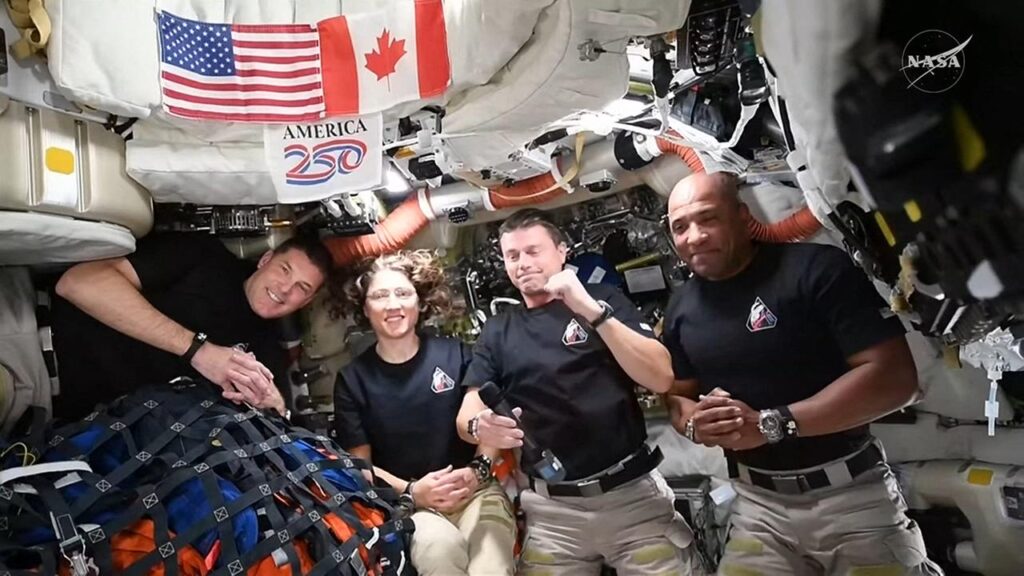
As Tagesschau reports, the Artemis 2 mission was a spectacular undertaking that was associated with significant financial expenditures. The total costs of the mission amount to several billion dollars, which fuels the discussion about the economic viability and benefits of such space projects.
The Artemis 2 mission, conducted as part of NASA's Artemis program, aimed to bring astronauts close to the Moon while collecting important data for future lunar missions. Despite the high investments, the crew did not return with new scientific insights about the Moon. Instead, data was collected during the mission that is significant for the planning and execution of future missions.
The Artemis missions are part of a comprehensive plan by NASA aimed at establishing a human presence on the Moon and ultimately preparing for Mars missions. The data collected from Artemis 2 is intended to enhance the safety and efficiency of future missions. In particular, the experiences gathered during the flight are of great importance for the development of new technologies and procedures.
The mission included several tests and experiments aimed at optimizing systems and processes. These included the verification of life support systems and communication systems, which are crucial for astronauts during their missions. The collected information is now being analyzed to plan the next steps in the Artemis program.
The discussion about the costs of the Artemis 2 mission also raises questions about the funding of future space projects. Critics argue that the high expenditures must be proportional to the results achieved. Supporters, on the other hand, emphasize the long-term benefits and the necessity of investing in space exploration.
Overall, the Artemis 2 mission demonstrates that space projects are not only aimed at scientific discoveries but also serve as a testing ground for new technologies and procedures. The data collected will be crucial in shaping the next steps in the Artemis program and preparing humanity for future missions to the Moon and beyond. However, the challenges and costs associated with such missions remain a central topic in the discussion about space policy and funding.