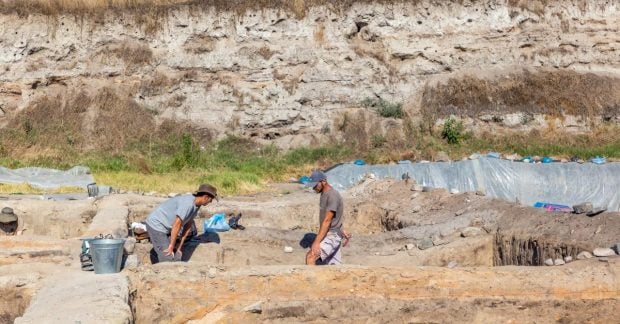
As the Ukrainian news agency UNIAN exclusively reports, archaeologists in Germany have discovered an ancient Roman aqueduct, identified as a completely artificially constructed channel. This so-called water "main line" sheds new light on the engineering and infrastructure planning of the Roman era in the region.
According to UNIAN, the find represents a significant archaeological discovery that provides information about the Romans' water supply systems. The channel was built as an artificial construction, indicating deliberate planning and sophisticated construction techniques. Scientists are currently investigating the exact purpose this aqueduct served and how it was integrated into the ancient settlement or economic structure.
The discovery underscores the advanced infrastructure of the Romans, which was also established in the northern provinces of the Roman Empire. Such aqueducts typically served to supply settlements, military facilities, or agricultural operations with fresh water. The exact function and historical classification of the now-found channel are currently being analyzed by experts.
As UNIAN further reports, the find could help deepen the understanding of Roman technology and everyday culture in Germania. Archaeological investigations of such structures often provide valuable clues about settlement patterns, economic activities, and living standards in antiquity. The discovery is considered an important contribution to the research of the Roman presence in Germany.
The scientists plan to determine further details about the course, construction method, and period of use of the aqueduct. Such research is part of ongoing efforts to comprehensively document and understand the Roman heritage in Europe. The results could be made accessible to the public in future museum presentations or scientific publications.