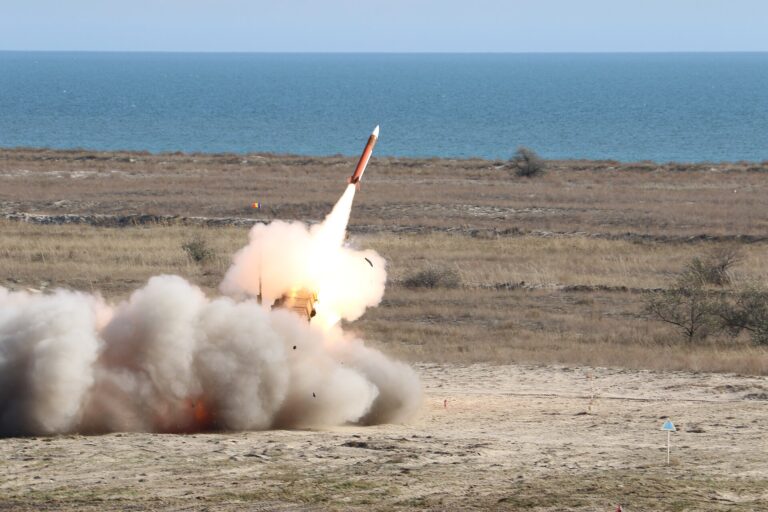
Germany is putting $300 million, about €273 million, into a new weapons package for Ukraine, mostly for guided missiles for Patriot air defence. Defence Minister Boris Pistorius (SPD) announced the contribution on Tuesday in Brussels, ahead of a meeting of EU defence ministers. It is Germany’s fifth contribution to NATO’s PURL initiative, and the package was assembled together with Norway.
The timing is not accidental. Overnight into Tuesday, Russian missiles hit Kyiv’s North and South bridges; according to Mayor Vitali Klitschko, water and heating failed in several districts. Pistorius cited the strikes as evidence that Russia is stepping up its air attacks “because it is not advancing on the battlefield”. Ukraine faces a particularly harsh winter, he said, and Moscow will keep targeting water, power and energy infrastructure. “Supporting Ukraine is not a charity event,” the minister said.
Who is actually paying for what?
PURL stands for the Prioritised Ukraine Requirements List. NATO Secretary General Mark Rutte and US President Donald Trump agreed it in July 2025. The principle: Kyiv reports its most urgent needs, NATO finds matching items in American stocks, and allies fund packages of roughly $500 million each. The money goes to the United States, which uses it to replenish its warehouses. The background was Trump’s demand that Europe pay for American military aid itself.
According to Ukraine’s Ministry of Defence, as of July 2026 this had raised $6.7 billion from 29 countries across more than ten packages. The largest donors were Norway ($1.36bn), the Netherlands ($1.163bn), Germany ($900m), Canada ($834m) and Sweden ($546m). If the July figure covers Germany’s previous four contributions, the new $300 million takes Berlin to roughly $1.2 billion. That is our own calculation; the federal government has not given an official total in this context.
Why the channel matters is shown by another claim from the ministry: about 95 per cent of Patriot interceptors, including PAC-3, reach Ukraine through PURL. The figure comes from the Ukrainian side and has not been independently verified, but it fits Pistorius’s point that Europe is buying systems that do not exist in Europe.
The bottleneck is production, not money
Patriot missiles are scarce worldwide, and according to the Kyiv Independent the shortage has worsened since the United States went to war with Iran. Pistorius is therefore betting on a second track: Germany and Europe have a very strong industrial base and could build US systems or ammunition under licence if Washington agrees. He intends to raise the issue again at the Ukraine Defense Contact Group meeting with Elbridge Colby, the US Under Secretary of Defense for Policy. Germany chairs the group jointly with the United Kingdom.
In parallel, Berlin is working on a European alternative: German IRIS-T missiles are to be integrated into the Norwegian NASAMS systems already in Ukraine. On top come, as announced earlier, IRIS-T systems, new radars for air surveillance and ammunition for F-16 jets and drones.
Our assessment: more money alone will not shorten the wait while American production lines are full; Europe is, in effect, buying places in a queue. Licensed production is therefore likely to become the real point of contention in the coming months. Whether Washington agrees is open; we think a quick yes is rather unlikely, with moderate confidence. For Ukrainians with family in Kyiv, Dnipro or Zaporizhzhia, it means that air defence remains the scarcest resource this winter.
Sources: Handelsblatt/dpa, Kyiv Independent, Ukrinform, Cabinet of Ministers of Ukraine