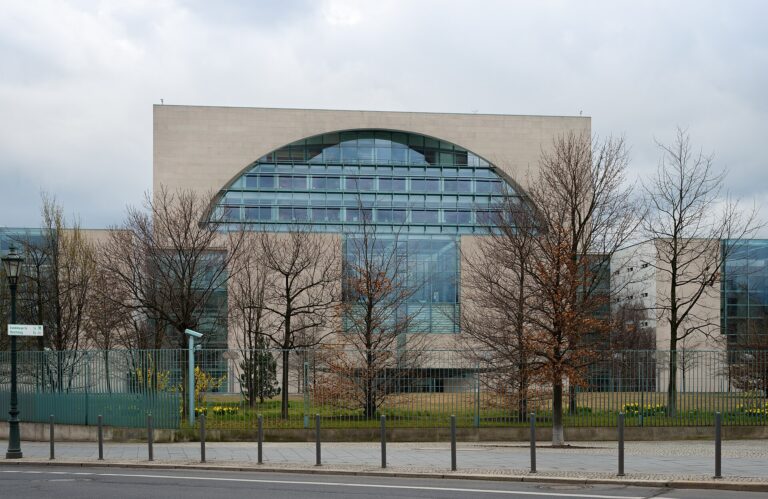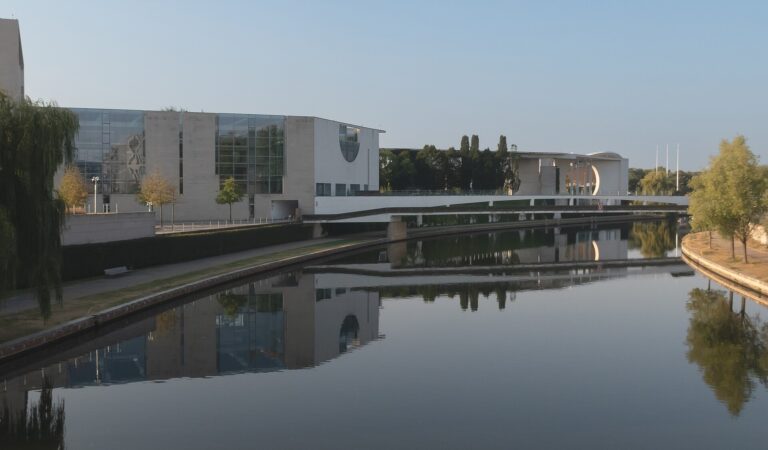
Friedrich Merz put a new kind of offer to Moscow on Thursday evening: if there is a ceasefire and real negotiations, sanctions on Russia could be lifted step by step, and only on conditions. The chancellor was the first to speak after the Coalition of the Willing met at the Chancellery in Berlin, with almost 40 delegations in the room. The German government had set the aim as “a just and lasting peace” for Ukraine.
According to Handelsblatt and Tagesspiegel (citing AFP), the proposal has three parts. The current line of contact would be the starting point for territorial talks. Ukraine would keep the option of closer integration with the West. And sanctions would come off only after a ceasefire, and only in stages. Handelsblatt quotes Merz as saying that in return, a “gradual, conditional lifting of sanctions against Russia” would be announced. He said talks can only succeed with Ukraine and Europe together, and that a “Yalta format” will not bring peace. He called the Trump–Xi–Putin summit in Shenzhen a “photo opportunity”.
Is this a U-turn? Not quite. On 13 March Merz criticised a temporary US licence for Russian oil: “Easing sanctions now, for whatever reason, we consider wrong” (ZDFheute; translated from German). On 12 October he ruled out Germany and the EU following a US diesel deal with Moscow (Meduza). What has changed is the sequence. Then, sanctions would have eased with nothing asked of Russia; now a ceasefire comes first. That is a shift in tactics rather than in aim. Europe wants a seat at the table while Washington and Moscow talk about Ukraine, and for that it needs leverage of its own. Sanctions are the biggest lever it has.
A promise costs little while nobody has to keep it. EU sanctions must be renewed unanimously every six months, so lifting them is formally simple but politically hard to coordinate: some member states would hold back, others push. Our reading, with moderate confidence, is that Merz’s offer is mainly bargaining capital and a signal to Washington, not a roadmap.
How will Moscow respond?
There was no Kremlin reply to the offer by Thursday evening. In Shenzhen, though, Vladimir Putin had already drawn two lines. He rejects any military cooperation between Ukraine and Europe as part of a deal, and after the strikes on the Crimean bridge he ruled out a ceasefire on energy or in the Black Sea. He also invited Europeans to Moscow for exploratory talks, saying the Americans were pressing Russia to agree. Poland’s prime minister, Donald Tusk, thinks serious negotiations before the end of winter are unlikely (Reuters, via Tagesspiegel).
Three paths look plausible. In the best case, US pressure brings Moscow to the table and Europe’s sanctions relief becomes part of a package. More likely, Russia ignores the offer and blocks talks on guarantees for Ukraine, above all the “Multinational Force Ukraine” meant to deploy after a ceasefire. In the worst case, Moscow uses the debate to split the Europeans. This is our assessment, not a forecast: there is no timetable and no document yet.
Next, on Friday, Merz opens the ninth German-Ukrainian Economic Forum in Berlin. Expect less about sanctions there and more about investment, reconstruction and what companies need to stay in Ukraine.
Sources: Bundesregierung, Handelsblatt, Tagesspiegel, ZDFheute, Meduza