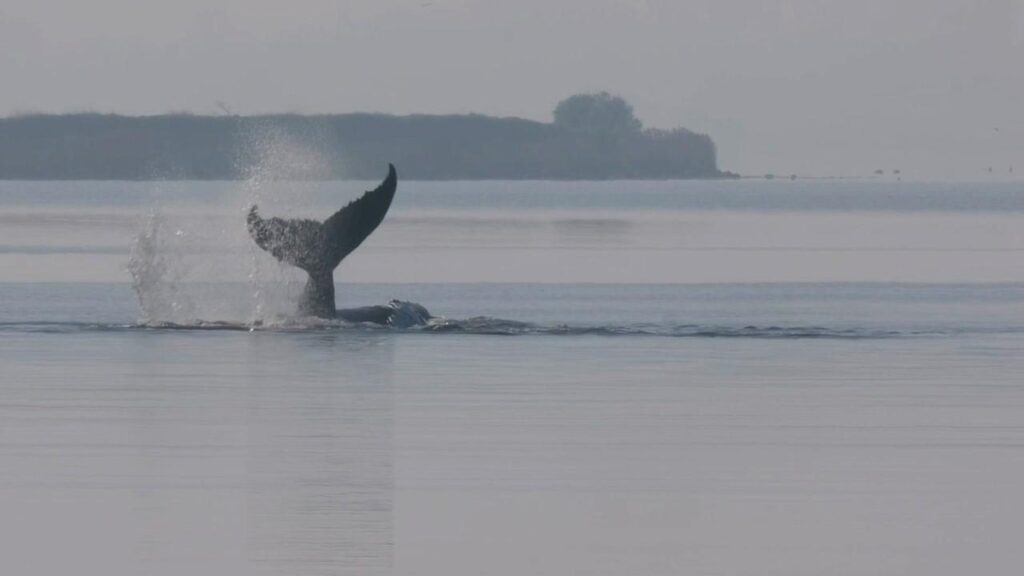
As Tagesschau reports, preparations for a new rescue attempt of a stranded humpback whale in the Baltic Sea are set to begin. The animal is in a sick condition, yet Environment Minister Till Backhaus is tolerating the activities of a private initiative. The goal of the attempt is to tow the whale to the North Sea in the coming days.
According to Tagesschau, Environment Minister Till Backhaus has granted approval for the rescue operation, even though the humpback whale is in poor health. This underscores the urgency of the situation, as stranded whales often have limited chances of survival. The private initiative conducting the rescue attempt is committed to protecting marine life and already has experience with similar missions.
The planned rescue operation involves transporting the humpback whale from the Baltic Sea to the North Sea, where better living conditions prevail. This step is necessary because the Baltic Sea is not a natural habitat for humpback whales, and the animal could not survive there long-term. In contrast, the North Sea offers more suitable waters and a higher likelihood of successful rehabilitation.
Environment Minister Till Backhaus emphasized in his decision that, despite the whale's illness, all possible measures should be taken to save its life. This reflects the general stance that species protection should have priority even in difficult cases. The approval of the private initiative's activities also shows that government agencies are collaborating with dedicated groups to achieve conservation goals.
The rescue operation will take place in the coming days, with the exact date not yet determined. The private initiative must proceed carefully to avoid causing additional stress or injury to the weakened whale. Experts point out that such rescue attempts are complex and require precise planning to maximize chances of success.
Humpback whales are rare in the Baltic Sea, as they typically live in open oceans like the Atlantic or Pacific. Their appearance in the Baltic Sea is often attributed to disorientation or health problems that impair navigation. This highlights the importance of swift and effective rescue measures to ensure the animals' survival.
The cooperation between the Environment Ministry and the private initiative could serve as a model for future rescue missions. It demonstrates how official permits and voluntary engagement can be combined to act quickly in emergencies. This is particularly relevant as climate change and human activities increasingly strain the marine environment and may lead to more strandings.
In conclusion, it remains to be seen whether the rescue attempt will be successful. Tagesschau will continue to report on developments, while those involved hope for a positive outcome.