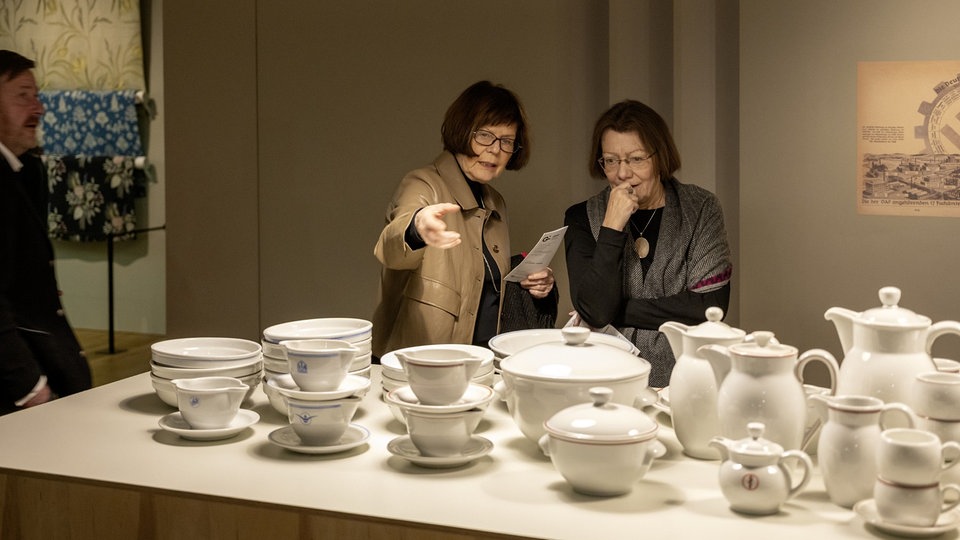
As Mitteldeutscher Rundfunk (MDR) reports, the Leipzig Grassi Museum of Applied Arts has received a significant award for its exhibition on design during the National Socialist (NS) era. The exhibition, titled "Design im NS" (Design in the NS Era), has been honored with the Prize of the Cultural Foundation of the German States (Kulturstiftung der Länder), as MDR exclusively announces. This recognition underscores the relevance of the exhibition, which critically examines the role of design during the National Socialist period.
According to MDR, the exhibition at the Grassi Museum addresses how design was instrumentalized for propaganda and ideology during the NS era. It showcases objects from various fields such as everyday items, architecture, and graphics, highlighting the aesthetic and functional aspects of design from that epoch. The exhibition aims to present a nuanced picture and reveal the complex interconnections between design, politics, and society.
As MDR further reports, the jury of the Cultural Foundation of the German States praised the exhibition for its scholarly depth and public impact. The award is seen as an acknowledgment of the museum's work, which makes an important contribution to coming to terms with the NS past. The award ceremony took place during a celebratory event attended by representatives from the museum and the Cultural Foundation.
The exhibition at the Grassi Museum is part of a broader initiative dealing with the reappraisal of the NS era in Saxony. According to MDR, the museum is collaborating with other institutions and experts to create a comprehensive picture. The exhibition targets a broad audience, including school classes and specialist visitors, and offers accompanying programs such as guided tours and lectures.
As MDR emphasizes, the award is not only a tribute to the exhibition itself but also a signal for the importance of cultural institutions in historical education. The Grassi Museum plans to keep the exhibition open for some time and possibly expand it to cover further aspects of the topic. The response from visitors and professional circles is described as positive, highlighting the timeliness and necessity of such projects.
Overall, the award demonstrates that the Grassi Museum has taken an important step in confronting the NS past with its exhibition. According to MDR information, the exhibition serves as an example of how museums can contribute to societal debate through critical reflection and public presentations. The honor from the Cultural Foundation of the German States underscores the national significance of this commitment.