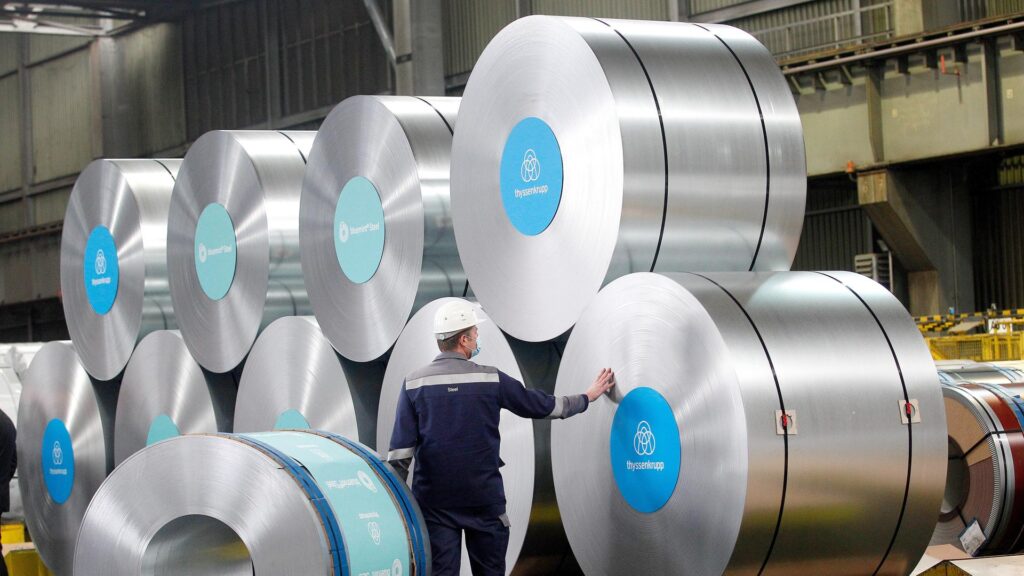
As Deutschlandfunk reports, the states of the European Union (EU) have reached a fundamental agreement to limit the amount of imported steel. This decision was made to strengthen the competitiveness of the European steel industry and to minimize the negative impacts of overcapacity in the market.
The agreement comes in a context where the steel industry in Europe is facing challenges exacerbated by overproduction in other regions, particularly in Asia. The EU states hope that limiting steel imports will stabilize prices and support domestic production.
The exact details of the agreement, including specific quantity limits and the affected steel products, have not yet been published. However, it is expected that the regulations will be specified in the coming weeks. The member states have emphasized that the measure is temporary and will be regularly reviewed to ensure that it achieves the desired effect.
The decision to limit steel imports is part of a broader strategy of the EU aimed at protecting the European industry in times of global economic uncertainties. In recent years, numerous European steel producers have struggled to remain competitive due to dumping prices and a flood of cheap steel from third countries.
The EU has previously taken measures to support the domestic steel industry, including anti-dumping duties on steel imports from certain countries. The new regulation could be seen as another step in this direction.
Reactions to the preliminary agreement are mixed. While some member states consider the measure necessary to protect the domestic industry, others warn of potential negative impacts on international trade and relations with key trading partners. Critics fear that a too strict limitation on imports could lead to higher prices for consumers and businesses.
The EU Commission will work out the details of the agreement in the coming weeks and present proposals for implementation to the member states. The agreement could also impact negotiations on trade agreements with other countries, as the EU seeks to strike a balance between protecting its own industry and maintaining open trade relations.
Overall, the preliminary agreement of the EU member states to limit steel imports demonstrates the efforts of the member states to respond to the challenges of the global steel industry and secure the competitiveness of European steel production. The coming months will be crucial to observe how this develops.