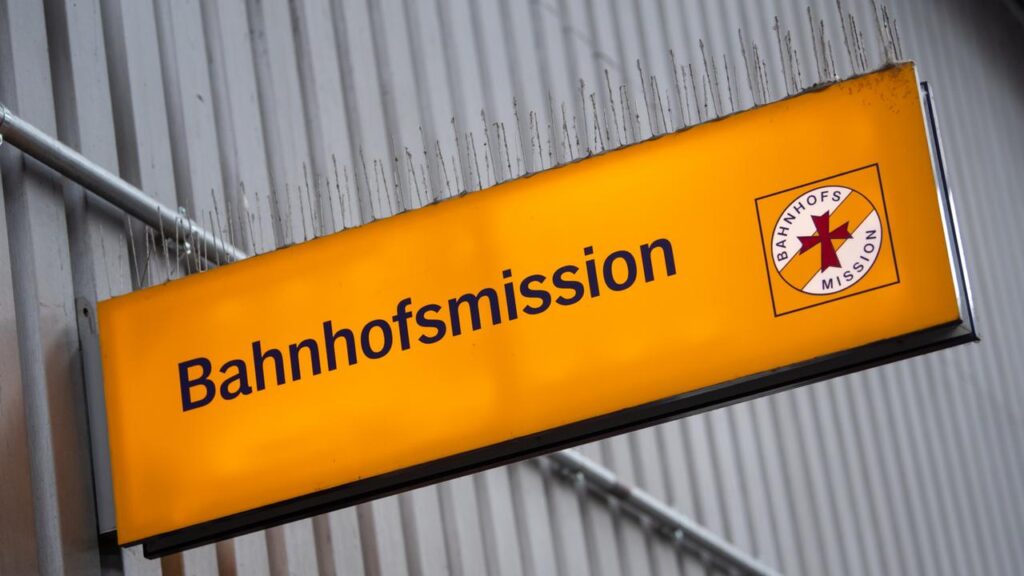
The rooms at the railway mission in Munich’s main station are bursting at the seams. Last year, more than 330,000 people sought help there—a significant rise that reflects a nationwide trend. Across Germany, the 102 railway missions are becoming crucial points of contact for a growing number of people grappling with existential hardships.
“Many who come to us, what we call ‘Munich’s poverty population,’ are directly and often acutely affected by poverty and deprivation,” says Bettina Spahn, one of the leaders of the Munich railway mission. “They lack the essentials, the very foundation for living.” Her words describe a development that extends beyond Munich, highlighting a broader societal issue.
Railway missions offer more than just a warm meal or a place to sleep. They often serve as the first port of call for those who have slipped through the social safety net. Assistance ranges from arranging accommodation and providing social counseling to offering initial medical care. Barbara Thoma, also involved in the Munich mission, emphasizes, “Anyone in need of help and facing problems can come here.”
Yet, the rising numbers underscore how urgently these services are needed. While the economy grows, an increasing segment of the population is being left behind. The railway missions thus document a social reality that often gets overlooked in public discourse.
The situation poses major challenges for these facilities. The cramped spaces in Munich are just one example of the infrastructural limits many missions are hitting. At the same time, demand is growing for professional support and long-term solutions—not only for the homeless but also for families, single parents, and people in precarious employment.
For those affected, railway missions are often the last resort before their situation spirals out of control. They provide not only material aid but also human compassion in moments of despair. In an era where social services are often bogged down by bureaucratic hurdles, these missions function as low-threshold access points.
This trend raises critical questions: Why is demand steadily increasing in an economically strong country like Germany? And how can society respond? Railway missions are doing vital work, but they cannot solve structural problems alone. Their surge in visitors reveals gaps in social safety nets through which more and more people are falling.
What began as emergency aid at train stations has become a barometer for social fractures. The rising visitor numbers are not just a Munich phenomenon but a nationwide trend. They make it clear: poverty and social exclusion are real and on the rise in Germany—even if they often play out behind the scenes.
Many people who come to us, we speak of the 'Munich poverty population,' are very concretely and often acutely affected by poverty and deprivation. They lack the most basic necessities, the foundation for life.
Unterstützung