A fierce debate has erupted in Germany over the use of a multi-billion euro special fund, with two prominent economic institutes sharply criticizing the government for allegedly diverting the money away from its intended purpose of future-oriented investments. The Ifo Institute and the Institute of the German Economy Cologne (IW) argue in recent analyses that the vast majority of the funds have been repurposed to plug holes in the federal budget, rather than being channeled into climate protection and infrastructure projects as originally promised. According to Ifo, a staggering 95% of the money has not gone toward additional investments in these critical areas.
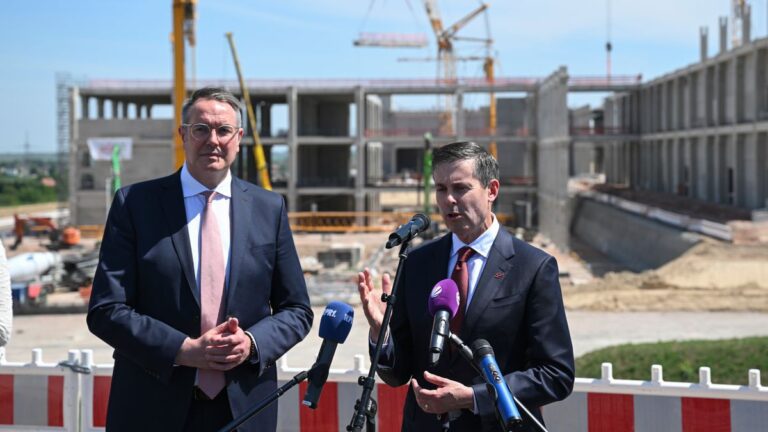
The government has firmly rejected these accusations. A spokesperson for the Finance Ministry stated that the claims made in the studies are incorrect, emphasizing that everything is transparent and that there are clear constitutional guidelines in place. However, the criticism extends beyond opposition parties, with the institutes raising fundamental questions about whether the special fund is actually delivering on its pledge to boost long-term investments. A year after the package was approved, there is a noticeable lack of visible additional spending in key sectors.
Matthias Miersch, deputy parliamentary group leader of the Social Democratic Party (SPD), defended the government’s approach, expressing confidence that the funds represent additional investments in the country’s future and promising that a detailed account would be provided. For taxpayers and the business community, the practical issue remains: where are these billions actually being spent? If the institutes’ criticism holds true, urgently needed modernizations in energy, transportation, and digital infrastructure could face further delays.
The controversy highlights the ongoing challenge of balancing short-term budget consolidation with long-term investment priorities. In the current economic climate, marked by high energy prices and inflation, every euro is being scrutinized more closely than ever. The implications are significant: if money from the special fund is indeed being used for routine expenditures, it will be unavailable for projects aimed at enhancing Germany’s competitiveness and advancing its climate goals. The government now faces mounting pressure to provide transparent documentation on how the billions are being allocated and to demonstrate that it is fulfilling its own promises.
The accusation raised in the studies is false
Das Finanzministerium wies