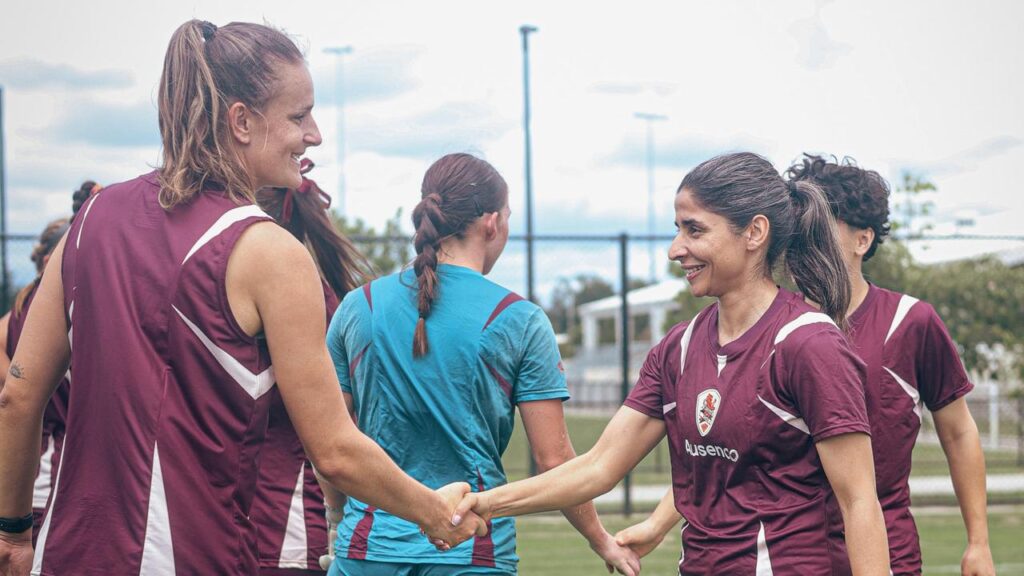
Two Iranian women’s football stars have found a new sporting home in Australia after fleeing their country over fears of persecution. Fatemeh Pasandideh and Atefeh Ramezanisadeh have begun training with Brisbane Roar’s women’s team, which competes in Australia’s top-tier A-League.
The players were part of a seven-member group from Iran’s national squad who applied for asylum during the Asian Cup in Australia earlier this year. Their decision came after they faced potential reprisals back home for remaining silent during the national anthem—a gesture that branded them as “traitors” in Iran.
“Welcome, Fatemeh and Atefeh,” the club posted on social media. A team spokesperson emphasized their commitment to providing “a supportive environment as they navigate their next steps.”
Joining Brisbane Roar marks a crucial turning point for the athletes. After weeks of uncertainty under the protection of Australian federal police, they can now resume regular training and hope to earn spots in the A-League squad.
Their story sheds light on the precarious situation facing female athletes in authoritarian regimes. What many in Europe take for granted—the freedom to compete without political pressure—remains out of reach in numerous countries.
For the football community, this case illustrates how sport can offer sanctuary. Yet it also underscores the lengthy and complex journey for persecuted athletes. While the two Iranians have found a club, their asylum process continues.
Australia’s Home Affairs Minister Tony Burke signed their temporary residency documents late at night, a sign of the case’s political sensitivity. The international sports world is now watching how their careers unfold.
Their move to Brisbane Roar is more than just a club transfer. It represents a small victory for sporting freedom—and a reminder that countless athletes worldwide still fight for basic rights.
We continue to strive to provide them with a supportive environment as they take the next steps.
Krieges