SPD leader Lars Klingbeil called the election a breach of taboo. The fact that the candidate of the AfD — classified as confirmed right-wing extremist — was elected state parliament president in Saxony-Anhalt with far more votes than the AfD alone holds raises urgent questions, he said. Klingbeil demanded that not only the BSW but also the CDU urgently explain how it came to this.
SPD General Secretary Tim Klüssendorf told the Rheinische Post his clear expectation of the CDU was that it immediately clarify who in its ranks may have thought this fatal decision was right. Rausch had been elected the previous day at the constitutive session of the state parliament in Magdeburg with 48 votes. AfD and BSW together hold 44 seats. The CDU parliamentary group leadership had recommended its 15 lawmakers abstain, but there were only five abstentions. Because the vote was secret, it is unclear who voted for the AfD candidate. The SPD, Greens and Left party groups had announced they would vote against Rausch; together they hold 22 seats. In total there were 29 no votes.
Protest march through Berlin
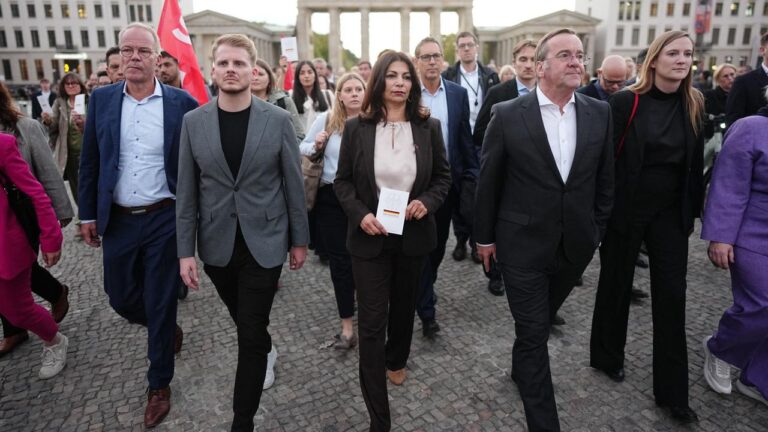
The previous day, many members of the SPD parliamentary group gathered for a protest march in the heart of Berlin. The lawmakers walked together from the Bundestag through the Brandenburg Gate to Bebelplatz, the site of the Nazi book burnings after the 1933 seizure of power. Several parliamentarians carried copies of the Basic Law. At the end, Defence Minister Boris Pistorius, after a passionate speech, led the national anthem. Group leader Miersch stressed that this was not a normal day. The SPD felt a duty to take a stand when democracy is under pressure, he said. For the first time since the founding of the Federal Republic, right-wing extremists had been elected to a state parliament presidium.
The CDU/CSU parliamentary group leader in the Bundestag, Thorsten Frei (CDU), said it was a secret ballot and that in principle anyone could have been involved. He would not engage in speculation about it. The fact that this is the case was, in his view, highly alarming and worrying. CDU leader Friedrich Merz has so far not commented. BSW federal chair Fabio De Masi told the Hamburger Abendblatt that the firewall had failed. Green co-leader Felix Banaszak told the Redaktionsnetzwerk Deutschland it was a creeping normalisation of right-wing extremist takeover. The coalition committee of the CDU/CSU and SPD is meeting in Berlin this evening; the date is not a reaction to the events in Saxony-Anhalt but is held regularly after a three-month summer break. The SPD said it would also seek an exchange about Saxony-Anhalt.
Source: Tagesschau