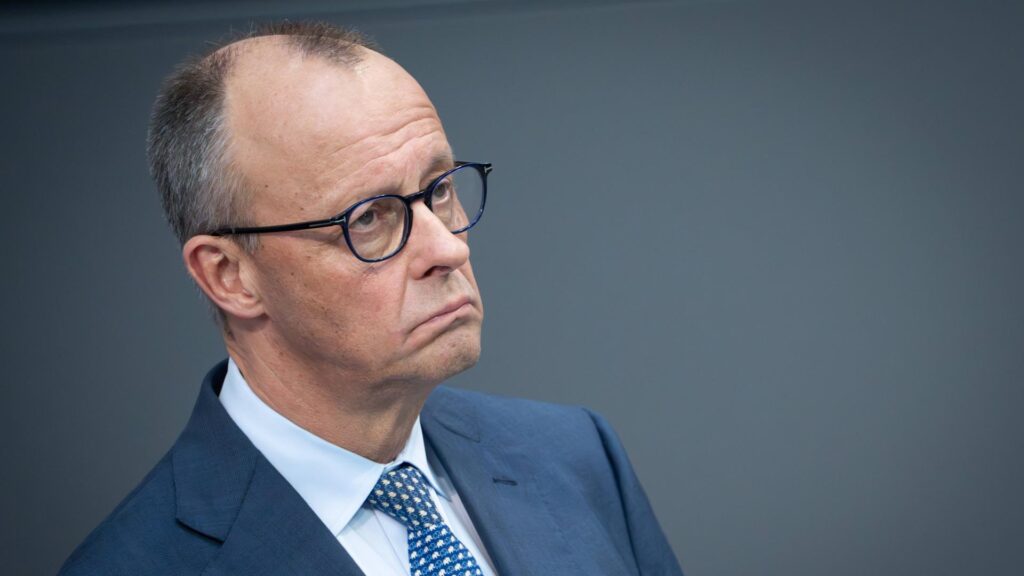
As Deutschlandfunk reports, Chancellor Merz has made a recent appeal to Israeli Prime Minister Benjamin Netanyahu, urging him to stop military operations in southern Lebanon. Merz emphasized the necessity of ending the violence and beginning a dialogue to achieve a peaceful solution in the Middle East.
The situation in southern Lebanon has been tense since the outbreak of the conflict between Israel and militant groups in the region. Merz's call comes at a time when international efforts to de-escalate the conflict are gaining urgency. The Chancellor expressed concern over the humanitarian consequences of the military confrontations and their impact on the civilian population.
In his statement, Merz highlighted that an end to military actions is the first step towards lasting peace. He urged both sides to come to the negotiating table and engage in constructive discussions. The Chancellor stressed that a peaceful solution can only be achieved through dialogue and compromises.
The military operations in southern Lebanon are part of a larger conflict that has developed over the years and has repeatedly led to violent confrontations. The region is marked by tensions between Israel and various militant groups, including Hezbollah, which operates in Lebanon. These groups have repeatedly launched rocket attacks on Israeli territory, leading to military retaliations from Israel.
Merz's appeal is supported by various international actors who also demand a de-escalation of violence and the resumption of peace talks. The European Union (EU) has also advocated for a diplomatic solution, emphasizing that peace in the Middle East can only be achieved through negotiations and not through military means.
Reactions to Merz's call are mixed. While some politicians and experts welcome his initiative and see it as a necessary step in the right direction, there are also critical voices pointing out that the military actions in southern Lebanon are part of a complex geopolitical situation that cannot simply be resolved through appeals.
The international community is watching developments in the Middle East with great concern. The humanitarian situation in the region has worsened in recent months, and many people are affected by the fighting. Aid organizations warn of a humanitarian catastrophe if the violence does not end soon.
In this context, Merz's call is seen as an important step to draw attention to the necessity of a peace process. The coming days and weeks could be crucial in determining whether there will be a de-escalation of violence and whether the affected parties are willing to engage.