For three weeks it has been known that BASF wants Evonik, and for three weeks almost nothing has been decided. There is no confirmed binding offer, and RAG-Stiftung, which holds about 43.8 per cent of Evonik and so has the casting vote, has not answered. Status: 18 October 2026.
On 25 September BASF confirmed “exploratory talks” with RAG-Stiftung and Evonik, saying that “the course and outcome of these exploratory talks remain open at this stage”. Evonik spoke only of a non-binding approach and said no talks were under way. Three days later Reuters, citing sources, reported an offer of around €10.3bn, or €22.15 a share, which Evonik was said to have rejected as too low. The figure has never been officially confirmed.
Why BASF wants it, and why sceptics do the sums
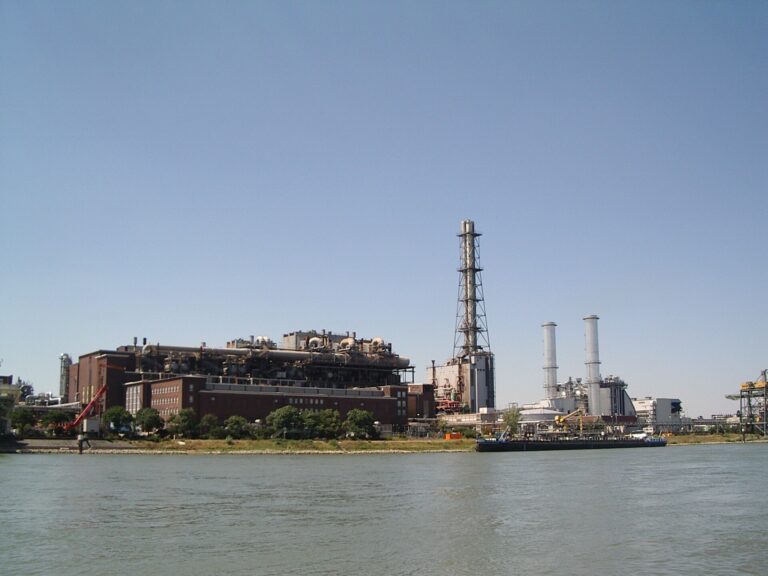
The logic is plain. BASF (about €60bn revenue in 2025, roughly 95,000 staff) lives on commodity chemicals, hit by high energy prices and Chinese competition. Evonik (€14.1bn revenue, around 31,000 staff) earns steadier margins from additives, silica and high-performance plastics. According to Industriemagazin, analysts see annual savings of €700m to €1bn.
Börsen-Zeitung, however, called the timing “the worst imaginable”. Before the rumours Evonik was worth about €8.4bn, or around €12bn including debt. With a typical 30–40 per cent premium BASF would pay more than €15bn, its biggest acquisition ever; the record so far is the 2018 purchase of Bayer’s seed and herbicide assets for about €7.6bn. BASF is also selling its coatings business to Carlyle and aims to list its agriculture arm by mid-2027. And there is a caveat: the sector’s present profits partly rest on shortages caused by the Middle East war, which will not last. In our view that is the strongest argument against paying a high price, though it can only be tested in hindsight.
Who has the last word?
Formally, RAG-Stiftung. It funds the perpetual burdens of hard-coal mining, such as mine water and groundwater, from its assets and needs reliable income. Its board of trustees, chaired by former North Rhine-Westphalia premier Armin Laschet (CDU) and including current premier Hendrik Wüst (CDU), met in an extraordinary session on 9 October and apparently postponed its decision. Reuters reports that BASF could raise its bid.
Politics is tangled. On 14 October the state government, according to economy minister Mona Neubaur (Greens), came out against the merger in the state parliament but also against the state buying shares; an SPD motion to examine exactly that failed with votes from the CDU, Greens, FDP and AfD. The IG BCE union had raised “open and critical questions” in a three-page letter to works councils on 7 October. Süddeutsche Zeitung, on 18 October, headlines that the union backs the merger while politicians oppose it; we could not read the full article, so the union’s stance is worth verifying.
Jobs are the most sensitive point. Handelsblatt reported on 2 October, citing employee representatives, that 3,000 to 4,000 posts could go in a combined group, mostly at Evonik sites in North Rhine-Westphalia such as the Marl chemical park. That is separate from Evonik’s existing programme: 3,200 jobs worldwide, 2,150 in Germany, unrelated to BASF. Reuters says BASF would be prepared to rule out compulsory redundancies in Germany until 2032; BASF has not commented.
Three ways it could end
One: BASF raises its bid and the foundation sells all or part, followed by merger review and years of restructuring. Two: the foundation says no and keeps its stake for the dividends, leaving Evonik independent but still cutting. Three: a halfway house of a partial sale or cooperation. We think two or three more likely than a quick full sale in the near term, since the foundation is under no time pressure and interim Evonik chief Claus Rettig (CEO Christian Kullmann is off after an operation) is unlikely to accept without a premium. That is our assessment, not a certainty.
For staff in Marl, Essen or Ludwigshafen, the upshot is that nothing is decided, no job cuts have been agreed because of a takeover, and the only reliable figures relate to Evonik’s existing programme.
Sources: BASF, Börsen-Zeitung, Industriemagazin, Handelsblatt, Süddeutsche Zeitung