France’s Prime Minister Sébastien Lecornu has ordered locally limited curfews after the serious riots at the weekend. After a crisis meeting of the government on Monday, 19 October, Lecornu said he had asked the prefects – the highest representatives of the central state in the départements – to impose curfews “partially” and “very locally limited”, as the Handelsblatt reports. According to hromadske, the measures were to take effect as early as Monday evening; which areas are affected is to be announced after consultations with the mayors.
Lecornu justified the step above all with the protection of shops. “One of the aims of this curfew is the protection of people, but also of property, especially of shops,” he said according to the Handelsblatt. One was dealing with a very specific, very particular criminality of looting and the resale of part of the looted goods. Lecornu did not rule out a state of emergency, but currently does not consider it the right instrument. This was a serious measure, he said. The Tagesspiegel recalls that the government already resorted to curfews in 2023 during similar looting and riots.
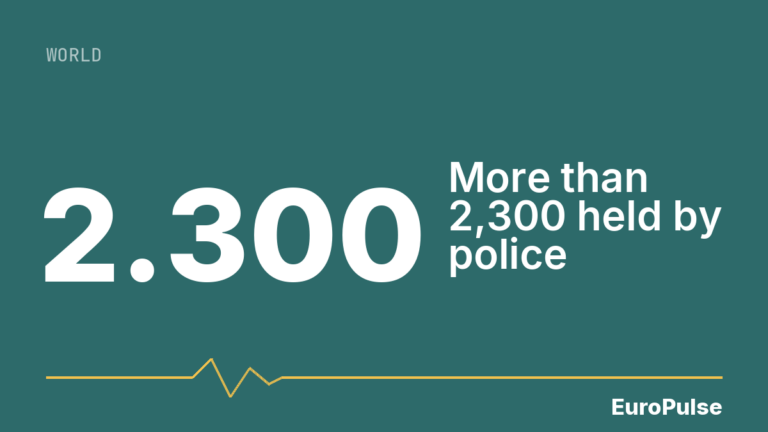
More than 2,300 people in police custody
The scale of the violence is considerable. Nationwide, according to the Ministry of Justice, more than 2,300 people were taken into police custody at the weekend, as tagesschau.de reports. In Paris alone, a further 350 people were arrested on Sunday and in the night to Monday, Interior Minister Laurent Nuñez announced; more than 80 per cent of them are facing criminal proceedings. The Tagesspiegel cites around 2,400 arrests for the weekend. There were numerous injuries during the riots. In Limoges, the 19th-century town hall burned down almost completely.
The situation also remained tense in the night to Monday. In Paris, dozens of rioters gathered for an unregistered protest on the Place de la République, as the Tagesspiegel reports, citing the newspaper “Le Parisien”. According to the report, demonstrators erected barricades and police used tear gas. As the broadcaster BFMTV reported, a special unit of the riot police specialising in serious urban unrest was later deployed. Clashes were also reported from Toulouse and Lyon, but these were far from the scale of the riots on Saturday.
Resignation refused, failures admitted
In view of the images from numerous cities, Interior Minister Nuñez had offered his resignation. “I submitted my resignation because I am responsible for everything that happens,” he told the broadcaster France Inter. President Emmanuel Macron refused it, according to the Élysée Palace, citing the “necessary continuity in the leadership of the security forces”. At the same time, according to the Tagesspiegel, Macron sees “failures” in the planning of police operations and in the gathering of information. Nuñez himself admitted that the security authorities had underestimated the number of participants; in some cities the police had lost control. There had been a lack of “forward-looking action”.
Macron had already announced a tough approach in a televised address on Sunday evening. “We all feel anger and shame this evening. It is unbearable to see the streets of our cities so devastated,” he said according to the Handelsblatt. “Those who destroyed must pay for it. Those who looted must compensate for the damage. Those who tried to overthrow the Republic will be held accountable for it.” At the same time, he called for demonstrators with legitimate demands not to be confused with those “who destroyed, smashed and looted”. On Monday, according to the Tagesspiegel, Macron departed on a multi-day trip to the Middle East, including Qatar and the United Arab Emirates, where the focus will also be on France’s oil supply in the energy crisis.
Yellow Vests call for “Act 2” on 24 October
The Yellow Vests protest movement, meanwhile, called for new demonstrations. On 24 October there would be an “Act 2” of the protests, the organisers of the weekend rallies announced on their website, as the Handelsblatt reports; demonstrations are again to be held in dozens of places. The Yellow Vests had kept France on tenterhooks between November 2018 and spring 2019; their name goes back to the yellow high-visibility vests worn by many demonstrators. Before the protest weekend, there had been calls to revive the movement.
In addition, according to tagesschau.de, calls for next Saturday are circulating on the internet, for example for Paris. However, these are not registered demonstrations by large organisations or trade unions, but an online phenomenon, says ARD’s Paris correspondent Michael Strempel. The biggest problem for the security authorities at present is spontaneous actions and calls. According to hromadske, Nuñez announced increased deployments of police and gendarmerie, especially ahead of the next planned day of demonstrations.
The government also promised financial aid for affected businesses, including a dedicated support fund and temporary wage support for employees who cannot work. The protests had originally begun with school pupils and students taking to the streets against overcrowded classes, poor conditions at schools and a shortage of teachers, and spread to issues such as the cost of living, wages and pensions. Lecornu accused far-left groups of wanting to provoke sustained unrest with a view to the 2027 presidential election.
The mayor of Marseille, Benoît Payan, spoke in an interview with BFMTV of “absolutely unheard-of scenes of violence” and a “security fiasco”. “The security forces were overwhelmed because they were outnumbered and not organised,” he said. The political scientist Jérôme Fourquet told the “Parisien”, according to the Tagesspiegel: “The street is becoming a gigantic outlet for impulsive discharges.”
German Interior Minister Alexander Dobrindt blamed far-left extremists and migrants for the violence. “Anyone who turns streets into battlefields, attacks police officers and sets town halls on fire is not demonstrating for better education, but waging an armed struggle against the free society and our way of life,” the CSU politician told the Bild-Zeitung. According to the Tagesspiegel, the German government does not fear that the protests will spread to Europe and Germany; a government spokesperson said this on Monday. The Foreign Office advises travellers to be cautious and to avoid demonstrations.
The editorial assessment: Lecornu’s curfews are an attempt to buy time with narrowly limited means – the real test comes on Saturday, when online calls and the mobilisation of the Yellow Vests combine. Whether the government brings the situation under control by then depends less on the curfews than on the question of whether the security forces manage to pool their forces in time this time.