In Israel’s parliamentary election, after counting 84.5 per cent of the votes, neither the right-religious camp of Prime Minister Benjamin Netanyahu nor the opposition around former military chief Gadi Eisenkot has achieved a majority in the 120-seat Knesset. As t-online.de reported on Wednesday, citing the count, Netanyahu’s Likud stands at 27 seats and Eisenkot’s party Yesh Atid at 22. The Netanyahu bloc is accordingly at 54 seats, the opposition camp at 49, and the Arab parties at 17 seats, although this number has shifted several times in the course of the count. An absolute majority requires 61 mandates.
The numbers have shifted several times in the course of the count. The Berliner Zeitung reported on Tuesday, after counting 76.8 per cent of the ballot boxes, 54 seats for Netanyahu’s alliance, 47 for the opposition camp and 19 for the two Arab parties; these numbers are provisional and have changed several times in the course of the count. The Israeli broadcasters Channel 13 and Kan, according to derstandard.at, saw both camps at 51 seats each in the night to Wednesday, while broadcaster N12 put the Netanyahu camp at 52 ahead of the Eisenkot camp at 49; these projections are based on exit polls and the first counted votes.
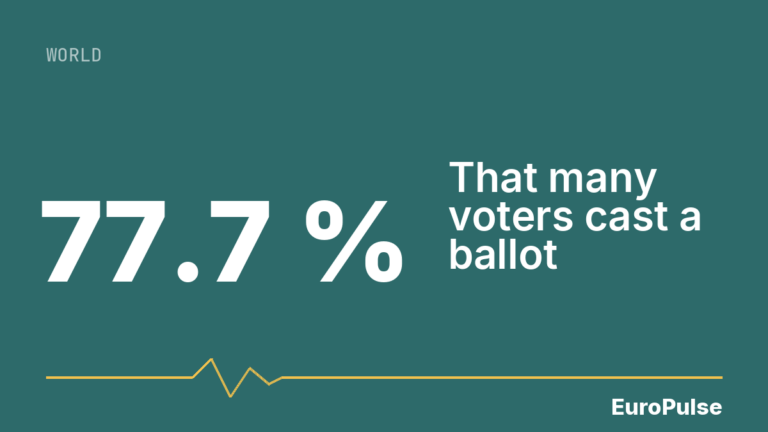
Record turnout of 77.7 per cent
The election was marked by an exceptionally high turnout. According to the Central Elections Committee, 77.7 per cent of the roughly 7.3 million eligible voters cast their ballots, as t-online.de and the Berliner Zeitung report in agreement. In 2022, turnout had been 70.6 per cent – according to the Berliner Zeitung, the highest figure since 1999. It was the first parliamentary election since the Hamas attack of 7 October 2023.
Both camps claim the lead. Netanyahu said in the night to Wednesday before supporters that Likud was “the largest party in Israel” and that the right-wing camp had a clear majority within the Jewish population. “We must not form a government that relies on Arab, anti-Zionist parties,” the 77-year-old said, according to t-online.de. Eisenkot declared in the early hours of Wednesday morning in Tel Aviv that the people had chosen “change”; he would “establish a Zionist government as quickly as possible”. Opposition leader Yair Lapid, according to t-online.de, spoke of a “crushing defeat” for the Netanyahu bloc, and the chairman of the left-liberal Democrats, Yair Golan, of a “historic opportunity” for a government of change.
Kingmaker against his will
Arithmetically, the opposition parties together with the two Arab lists would come to 66 mandates, as the Berliner Zeitung and the Guardian report; politically, however, such cooperation is controversial. Politically, such cooperation is nevertheless difficult. Eisenkot has so far rejected government participation by Arab parties unless they accept certain conditions – according to the Guardian, he demands recognition of Israel as a Jewish state and the classification of Hamas as an extremist group, which de facto rules out cooperation. The Tagesspiegel quotes him as saying at an election campaign event that there would be “no Arab party in the next government”. Avigdor Lieberman of the secular-nationalist party Yisrael Beiteinu ruled out any cooperation with the Arab parties.
The Arab parties are recording a surprise success. The Islamist-conservative Raam party would come to six seats, according to t-online.de, and the left-wing Joint List to eleven; these numbers are provisional and may still change. The Guardian reports that the Joint List, with at least eleven seats, is the third-strongest force behind Likud and Yesh Atid; according to the figures from 11 a.m. local time, it was 13 – these details are based on provisional counts. Its chairman Yousef Jabareen demanded a “genuine Jewish-Arab partnership” on Wednesday morning and, according to the Guardian, spoke of Netanyahu’s “government of bloodshed”. Raam leader Mansur Abbas expressed willingness to talk on broadcaster N12 and voiced hope for a joint majority with the Eisenkot camp, as the Tagesspiegel reports. Raam joined an Israeli government coalition in 2021 as the first independent Arab party, then under Naftali Bennett.
Arab Israelis make up around 20 per cent of the population. Their turnout was decisive this time, the Guardian writes. Raam observer Manar Hassan called the turnout “astonishing”: “It has never been this strong.” As the reason, she said: “We have experienced a catastrophe in Gaza. Here we live in fear. We need drastic change.”
Election day was also accompanied by dispute over possible manipulation. Netanyahu had accused the Raam party of electoral fraud; the police, according to t-online.de, reported three arrests on suspicion of vote-buying, and the election commission spoke of an isolated case. The commission rejected a Likud request for longer opening hours at polling stations.
The count is likely to take some time yet. Up to 650,000 votes were cast in so-called double envelopes, including votes from soldiers, diplomats and voters outside their regular electoral district; they are examined separately and, according to Ynet, could still change the seat distribution, as the Berliner Zeitung reports. The final results must be published by 4 November at the latest. After that, President Isaac Herzog consults with the parties on who receives the mandate to form a government – not necessarily the chairman of the strongest party. The tasked candidate initially has 28 days to form a coalition; Herzog can extend the deadline by 14 days. Until then, Netanyahu remains in office as caretaker. The new Knesset is due to convene for the first time on 10 November.
Editor’s note: Whether a coalition with the Arab parties will come about is open; the seat numbers are based on provisional counts and may still shift as a result of the special count.