As of 30 October 2026. Germany’s Federal Ministry of Health has formally set the average supplementary contribution (Zusatzbeitrag) for statutory health insurance in 2027 at 2.9 per cent – the same figure as for 2026. “We have now stopped this development,” said Health Minister Carsten Linnemann (CDU). “This can only be a first step.”
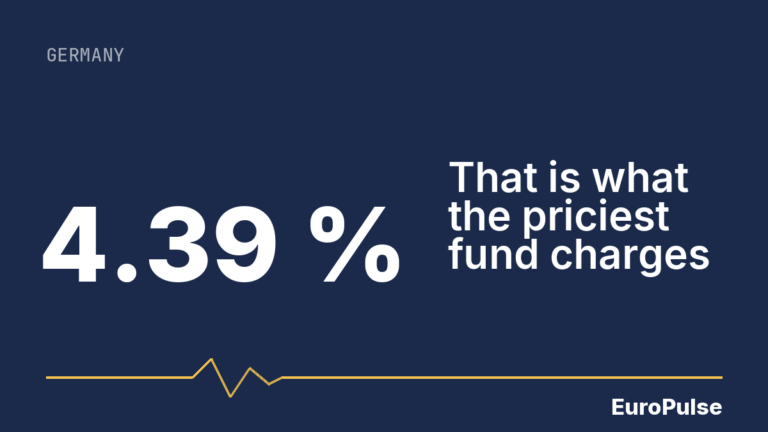
What matters is what the number is not: it is not the price you pay. It is a calculation benchmark. Each of the roughly 90 health funds sets its own rate on top of the uniform general rate of 14.6 per cent. The average was also meant to be 2.9 per cent in 2026, yet the GKV umbrella body says funds actually charge about 3.1 per cent on average. Individual rates range from 2.18 to 4.39 per cent.
Where the stability is supposed to come from
The forecast came from the Schätzerkreis, a panel drawn from the ministry, the Federal Office for Social Security and the GKV umbrella body, which met on 13 and 14 October. It expects fund spending of €370.1 billion in 2026 and €378.1 billion in 2027 – about €8 billion more, or a little over 2 per cent (dpa reports 3 per cent). Spending rose by roughly 7 per cent in 2026. The ministry credits the contribution-stabilisation law the Bundestag passed on 10 July: spending caps for hospitals, a bigger manufacturer rebate on medicines, co-payments up by 50 per cent and, from 2028, a surcharge for spouses insured free of charge (parents of children up to 12 are exempt). Without countermeasures, the gap was projected at about €19 billion in 2027 and about €44 billion by 2030.
The savings are quoted differently: figures around the forecast mention up to €15 billion, the ministry’s latest release up to €19 billion. Both are targets, not booked savings.
Why caution is warranted
The 2.9 per cent ignores that many funds still have to rebuild their reserves. GKV chief Oliver Blatt warns that some will miss the minimum reserve by year-end, and he sees a further risk of up to €1.3 billion in a planned “location clause” for drugmakers. Greens health politician Janosch Dahmen expects at least 3.1 per cent on average in 2027 and notes the stability pledge already failed in 2026. SPD’s Christos Pantazis calls the forecast good news for about 75 million insured people. Our assessment: an average slightly above 3 per cent is more likely than exactly 2.9. Most funds decide their own rate only in December – HEK on the 17th, KKH on the 18th and 19th.
What you can do now
If your fund raises its rate on 1 January, you have a special right to leave: choose a new fund by 31 January at the latest; you do not need to cancel the old one. Membership ends at the end of the second following month, so choosing in January means joining the new fund on 1 April. Members with a sick-pay (Krankengeld) tariff are excluded. A half-point difference is easy to price: on a €3,000 gross salary, employee and employer split the supplementary contribution equally, so 0.5 percentage points cost you €7.50 a month, or €90 a year.
Politically the issue stays open: the FinanzKommission Gesundheit is due to present further structural proposals by the end of 2026. Earlier coverage on switching funds: Health insurance 2027: don’t miss the deadline to switch.
Sources: Federal Ministry of Health, ZDFheute, Berliner Zeitung, zm-online, Apotheken Umschau