Ukrainian long-range drones attacked the Lukoil Nizhny Novgorodnefteorgsintez refinery and the neighbouring Novogorkovskaya thermal power plant in the town of Kstovo in Russia’s Nizhny Novgorod region in the night to Sunday, triggering several large fires. That is reported by the Kyiv Post, citing the Ukrainian OSINT channels Exilenova+ and Crimean Wind. The Kyiv Independent reports that the attack on the refinery was reported by Ukrainian monitoring channels but could not initially be independently verified by its editorial team.
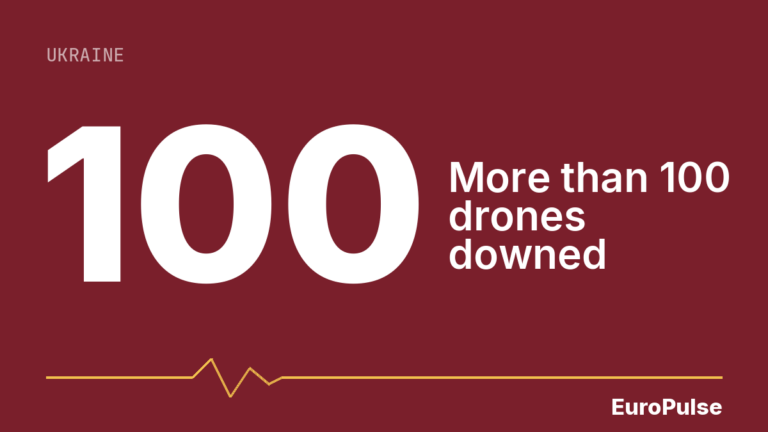
The governor of the Nizhny Novgorod region, Gleb Nikitin, confirmed a hit. During the “massive drone attack”, an “industrial enterprise in the Kstovo district suffered considerable damage”, he said, according to the Austrian daily Die Presse. In total, “more than 100 drones were destroyed” and there were no casualties, Nikitin added. According to n-tv.de, citing the state news agency Tass, a criminal case for terrorism has been opened. The regional government announced measures, according to n-tv.de citing Tass, to ensure fuel supplies at petrol stations.
Fires from 4 a.m. local time, dense air defences breached
According to the Kyiv Post, residents in Kstovo circulated footage of large flames over the industrial zone from about 4.00 a.m. local time; they reported repeated loud detonations and low-flying drones. According to Exilenova+, the drones penetrated the dense local air defences and simultaneously triggered several fires in different parts of the plant. Crimean Wind confirmed that flames engulfed parts of the refinery. Besides the refinery, the neighbouring Novogorkovskaya thermal power plant was also attacked, which supplies the surrounding petrochemical facilities, including the Lukoil refinery, with high-pressure steam and electricity.
The facility belongs to the Russian oil company Lukoil. According to the Kyiv Post, it has an annual design capacity of around 17 million tonnes of crude oil. That makes it the fourth-largest refinery in Russia and the second-largest producer of motor petrol. The Kyiv Independent cites a processing capacity of around 15 to 17 million tonnes of crude oil per year and a distance of around 800 kilometres to the Ukrainian border. Among the products made there are motor petrol, diesel, aviation kerosene and bitumen; according to the Kyiv Post, Russian military logistics also uses these fuels.
A repeated target – and a pause that ended
The refinery had already been a target of Ukrainian attacks this year. The Kyiv Independent recalls a confirmed hit on 26 August, after which the NORSI plant suspended operations because of damage. Since the start of 2026, Ukraine has been conducting a campaign of long-range drone attacks on Russian energy facilities, above all refineries and fuel depots.
Die Presse places the attack in a series: in the night of 30 to 31 October, according to the Kyiv Post, Ukrainian drones hit the Ufa industrial complex in Bashkortostan and set fire to the L-35 catalytic reforming unit of the Bashneft-Novoil refinery. In the previous night, that is the night to Friday, 30 October, the Novokuibyshevsk refinery of the Rosneft company in the Samara region, which produces special fuel for the Russian air force, was attacked. On Friday, according to Die Presse, Moscow stated that Ukraine had resumed its attacks on Russian refineries after a pause of several days. Previously, according to Die Presse, US President Donald Trump had sharply criticised Kyiv for the attacks and blamed them for rising energy prices.
The Kyiv Post also points to a combined attack by the Ukrainian navy and drone units in the night of 30 to 31 October with land-based Neptune cruise missiles and long-range drones on the Kamensky chemical plant in Kamensk-Shakhtinsky in the Rostov region. A warehouse with solid rocket fuel caught fire and four production halls were damaged; the plant produces propellant charges for the Uragan, Smerch and Tornado-S multiple rocket launcher systems as well as tactical guided missiles. This information is based solely on the Kyiv Post’s account and has not been confirmed by the Russian side.
Editor’s note: Whether the fires in Kstovo are exclusively due to drone hits and how great the damage to the refinery actually is cannot be conclusively determined on the basis of the available sources. The Ukrainian information comes from OSINT channels, the Russian from Governor Nikitin and the Investigative Committee – both sides pursue their own interests. In the coming days, it will be worth watching whether Lukoil reduces operations in Kstovo and whether the Russian side reports further attacks on energy infrastructure.