On Thursday the Bundestag extended the special rights for electric cars in road traffic and set the first part of the driving licence reform on its way. As tagesschau.de reported on Thursday, 5 November, the reformed Electromobility Act extends the rules previously limited until the end of 2026 and expands them at the same time.
In future, municipalities will therefore be able, among other things, to designate parking spaces specifically for electric cars, grant them separate access rights and reduce or waive entirely the fees for residents’ parking permits for electrically powered vehicles. These preferential treatments are initially possible until the end of 2035. Also new in the law are electric buses and electric lorries, for which municipalities can adopt exemption rules, as well as electric light motor vehicles that may travel at a maximum of 45 kilometres per hour.
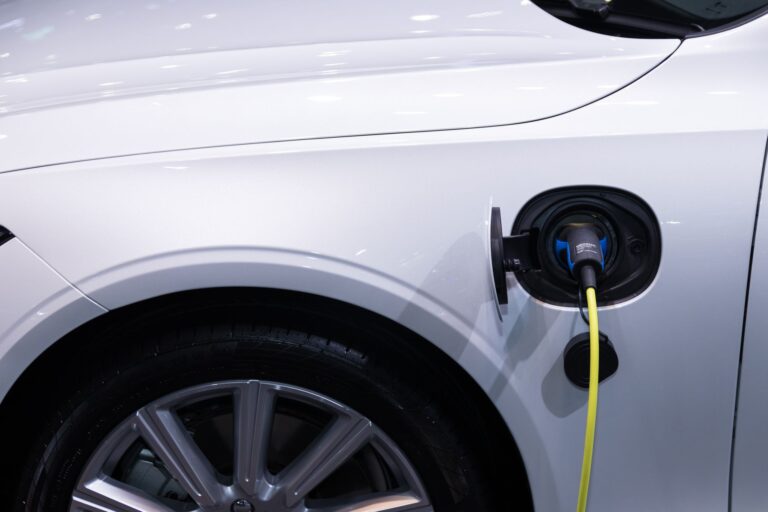
Anyone charging their e-car or plug-in hybrid at a public charging point should in principle no longer need an E-plate for it. According to the Federal Ministry of Transport, which tagesschau.de cites, a rule in the Road Traffic Regulations will be sought in future under which it is sufficient for the plug to be inserted and the charging station to be recognisably in use. Until then, the signage on site applies. Electric cars registered abroad will then also no longer require additional labelling.
The time-limited rules apply to electric cars, fuel cell cars and certain plug-in hybrids. The latter benefit only if they can drive more than 80 kilometres purely electrically or emit a maximum of 50 grams of CO2 per kilometre.
Plenty of scope, but few municipalities use it
The federal law has offered cities and municipalities the possibility of favouring electric cars since 2015. According to the German Association of Cities, Dortmund and Essen, for example, have exhausted the entire set of instruments. Its chief executive Christian Schuchardt told tagesschau.de that the cities’ experience so far with the new possibilities had been positive. Free parking at charging points and special parking spaces for electric vehicles are particularly widespread. Opening up bus lanes to electric cars had been controversial from the outset.
Nationwide, however, only a few municipalities use the possibilities. In Ludwigshafen am Rhein, drivers of combustion-engine and electric cars have again been paying the same parking fees since 1 January 2025; previously electric cars had been allowed to park free of charge for two years in municipally managed car parks. A spokesperson for the city explained that the administration had at the time recommended the city council to vote for the abolition of the privilege because the rules had been intended for a transitional period. In Kaiserslautern, too, the fee exemption ended at the end of 2022 after five years. There, e-cars are exempt from parking fees for three hours while charging if a parking disc is placed behind the windscreen.
The German Association of Cities considers it necessary to limit the benefits in time. According to its words, which tagesschau.de cites, additional privileges no longer make sense from its point of view once more than 50 per cent of new registrations are electric. The Federal Association of Freight Forwarding and Logistics welcomes the innovations in principle. A spokesperson said according to tagesschau.de that the precondition, however, was that the municipalities actually used these possibilities and created easements for electrified delivery traffic. Road traffic advantages alone would not decide whether companies electrify their fleets.
Driving licence: up to 1,000 euros less – but not until July 2027
On Thursday the Bundestag also voted on the Transport Ministry’s legislative plans for driving licence training. According to ZDFheute on Thursday, a class B car driving licence currently costs an average of around 3,400 euros, according to the Federal Ministry of Transport. Transport Minister Steffen Bilger (CDU) held out the prospect in conversation with the “Welt” of savings of several hundred euros, in the best case up to 1,000 euros. The Berliner Zeitung reports that the most important innovations are not due to apply until 1 July 2027.
The attendance requirement in theory lessons is to be dropped; learner drivers are to be able to acquire the knowledge at home via an app or a learning platform. The question catalogue for the theory test is to shrink from currently 1,169 questions by just under 30 per cent to around 840. The twelve special drives at night, on the motorway and on rural roads prescribed so far are no longer to exist as a fixed number; how many hours are needed is to be decided by the driving instructor according to the pupil’s ability. The practical test is to last 40 instead of 55 minutes in future, with pure driving time falling from 30 to 25 minutes. Driving schools are to report prices and pass rates to a central database in future so that comparison portals can process them.
The supporters see the greatest savings potential in so-called lay training: learner drivers may then additionally practise on public roads with a person close to them. The preconditions are passing the theory test and at least six practical driving lessons. Accompanying persons must have held a car driving licence for at least seven years and may have at most one point in Flensburg; they must also be trained in theory and practice at the driving school. What is decisive, however, is that each of the 16 federal states must introduce lay training by its own ordinance and is to trial it for five years with scientific support.
The ADAC expects up to a third lower costs under optimal conditions. A spokesperson stressed according to ZDFheute that it was important that cost reductions did not come at the expense of training quality and road safety. The driving instructors are considerably more sceptical. Kurt Bartels, deputy of the Federal Association of Driving Instructor Associations, said according to ZDFheute that he could not follow Bilger’s calculation. The association strictly rejects parent drives as “training of laypeople by laypeople”. The road safety association Moving also considers the sum unrealistic and sees a safety risk in online theory without attendance and parent drives after only six hours.
The Green transport politician Swantje Michaelsen called the reform a wrong path according to ZDFheute: “Instead of making the driving licence more affordable, it lowers the standards.” The SPD transport politician Truels Reichardt said it was not yet foreseeable how much cheaper it would become. The CDU MP Henning Rehbaum explained that this depended decisively on how the states now developed the ordinance further in the Bundesrat. According to the Berliner Zeitung, the Parliamentary State Secretary Christian Hirte (CDU) even considers rising insurance contributions conceivable.
How strongly the announcement has already had an effect is shown by a survey by the association Moving among 2,424 driving schools, about which the Berliner Zeitung reports: 84 per cent reported fewer new registrations, an average decline of 54 per cent, and of around 58 per cent in major cities. The ministry had at the time expressly advised against waiting.
Editor’s note: Even if the Bundestag has agreed, most of the rules will not take effect until summer 2027 at the earliest, and on parent drives the federal states have the final say.