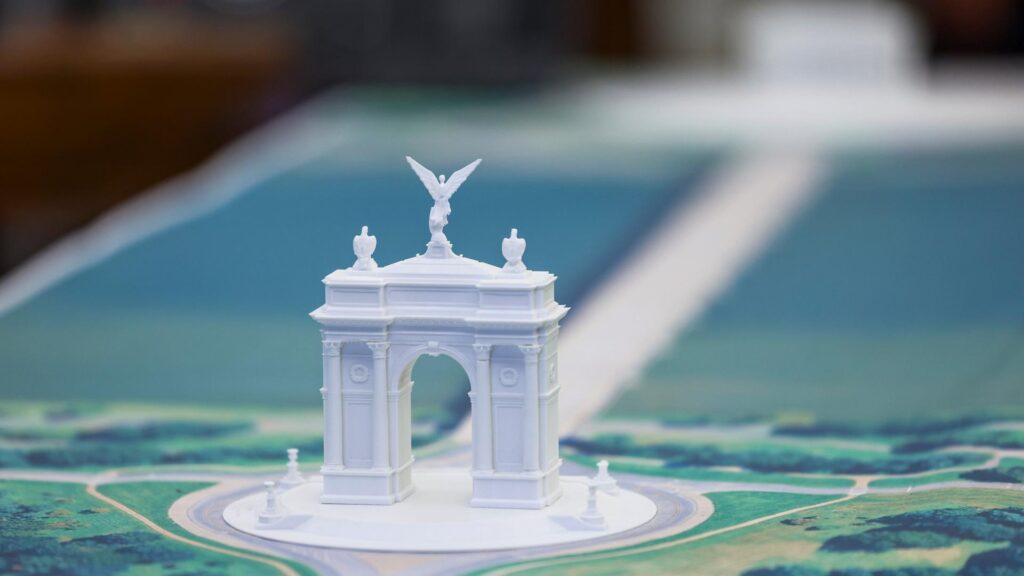
According to President Donald Trump, the US government has submitted plans for the construction of a 76-meter high arch in the capital, Washington, D.C., to the relevant commission. The design proposes that the arch be erected at a prominent location to honor the history and achievements of the United States.
The planned arch is intended not only to serve as an architectural landmark but also as a symbol of national unity and pride. In a press release, President Trump expressed optimism about the project and emphasized the importance of such monuments for the cultural heritage of the country.
The plans were developed by a team of architects and urban planners who have considered the integration of the structure into the existing urban landscape of Washington. According to government officials, the arch is to be built in an area already known for tourist attractions, in order to further increase visitor numbers.
The approval of the project now lies with the Commission on Historical Monuments and Public Art, which will review the designs. Critics of the project have already expressed concerns that the construction of such a large monument in downtown Washington could disrupt the cityscape. Supporters, on the other hand, argue that the arch would create a significant cultural heritage that could inspire future generations.
The costs for the construction of the arch are currently unknown; however, it is expected that funding will come from both public and private sources. The government plans to hold public hearings in the coming months to gather citizens' opinions on the project.
The project is viewed in the broader context of infrastructure investments and urban development plans promoted by the Trump administration. The aim is to boost the economy and create jobs while simultaneously honoring the cultural heritage of the nation.
The discussion surrounding the arch is expected to intensify in the coming weeks and months, as both supporters and critics will publicly present their viewpoints. The decision on the approval of the plans is seen as an important step for the future development of the capital and could have far-reaching implications for urban development.