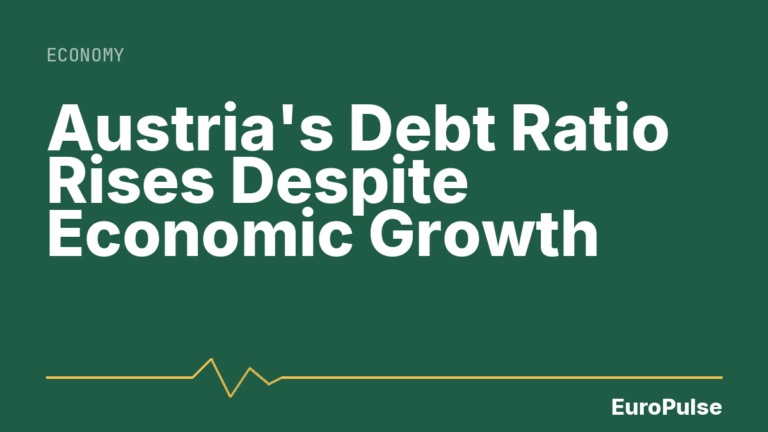
Austria’s leading economic research institutes – the Institute for Economic Research (Wifo) and the Institute for Advanced Studies (IHS) – expect GDP growth of 0.9 percent this year and just over one percent next year. This puts the Alpine republic in line with the EU average and slightly ahead of Germany. However, inflation is expected to remain relatively high at 3.2 percent this year and 2.4 percent in 2027, partly due to rising mineral oil prices and the expiry of the fuel price cap at the end of June.
Despite austerity measures, the general government deficit will reach four percent of gross domestic product (GDP) in 2026 and 3.7 percent in 2027 – well above the EU’s permitted three-percent threshold. Finance Minister Markus Marterbauer (SPÖ) aims to hit the target by 2028. Wifo chief Gabriel Felbermayr criticized the dual budget for 2027/28, presented in early June, as “not yet a consolidated budget.” He said high new borrowing prevents a reduction in the debt ratio, and debt service will “eat up ever larger shares of the budget.”
IHS director Holger Bonin described the reduction in non-wage labor costs agreed in the dual budget as an “expensive and poorly targeted measure.” He added that two-thirds of the consolidation would come from higher taxes and levies. According to IHS calculations, the debt ratio rose to 81.3 percent last year and is likely to climb to 83.1 percent in 2026 and 84.3 percent in 2027. The Fiscal Council and the Oesterreichische Nationalbank (OeNB) also doubt the effectiveness of the austerity measures.
Source: www.faz.net