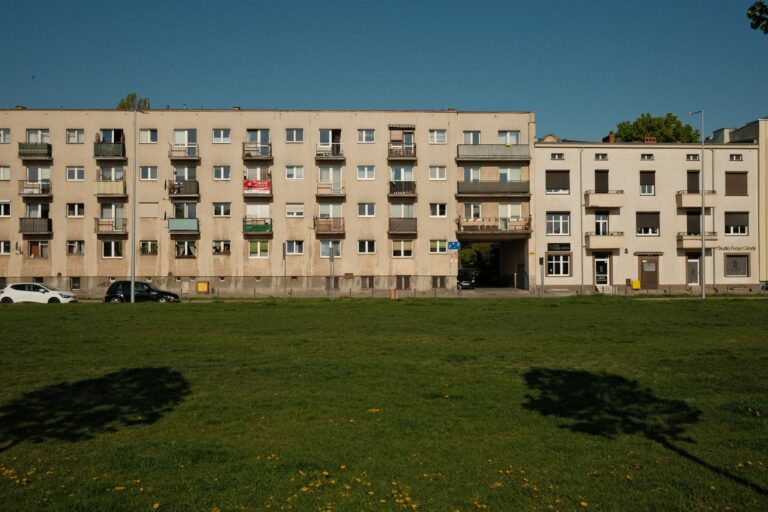
Hesse has capable companies that build homes. A federal housing corporation is unnecessary. The numbers are impressive: year after year, the Nassauische Heimstätte/Wohnstadt (NHW) group invests an average of around 100 million euros in housing construction. Since 2020, the group has completed about 4,200 apartments, a large portion of which are publicly subsidized. A focus is on Frankfurt’s Schönhofviertel, currently the largest new development quarter in Hesse. The company, whose largest shareholders are the state of Hesse and the city of Frankfurt, is also active in other Hessian cities, such as Darmstadt and Fulda.
The 2025 annual report shows that NHW is economically healthy and, with comparatively moderate rents, makes a significant contribution to alleviating the housing shortage in the Rhine-Main region. If not more is being built and renovated, it is not due to a lack of capacity. The hurdles are rather high costs or a lack of building land. There are also recurring uncertainties regarding federal funding programs, which are often changed or discontinued at short notice, but without which housing construction is hardly profitable anymore.
Anyone who wants more housing construction must address these issues. Construction costs, for example, can certainly be influenced. On Tuesday, building research institutes in Berlin pointed out that a third more apartments could be built if tightened building standards had not unnecessarily driven up costs in recent years.
All players, whether private or public, struggle with this problem. The federal housing corporation now planned by the federal government will not change that. According to the idea, it is supposed to develop, coordinate, and finance housing construction projects. But what will likely emerge is merely a bureaucratic behemoth that wants to centrally manage what is actually better decided in the regions that have a great need for housing. There, politicians and businesses themselves know where and in what form construction should best take place.
There is no shortage of capable housing construction companies in the Rhine-Main area anyway. Besides Nassauische Heimstätte, these include municipal players such as ABG in Frankfurt, Bauverein in Darmstadt, and SEG in Wiesbaden, as well as private developers and investors, without whose capital the housing market would look even worse, contrary to all prejudices. To be able to build, they need good framework conditions. The federal government should create these—and not a sham solution that is shaped by a belief in the state’s omnipotence and is thus out of touch with the times.
Source: www.faz.net