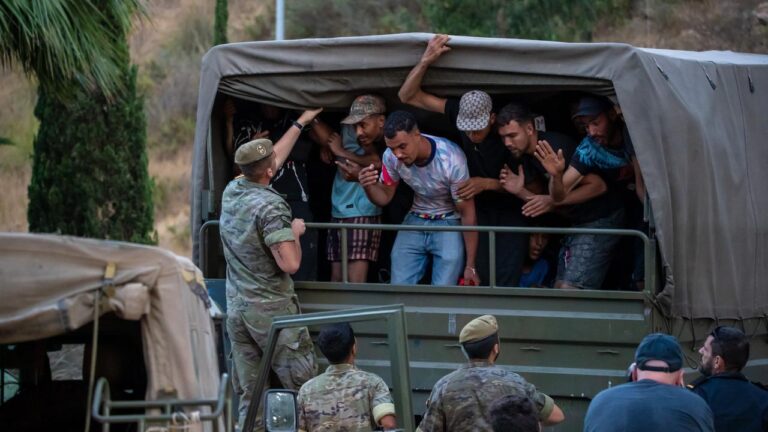
The images of migrants who reached the Spanish enclave of Ceuta in recent days have alarmed Europe. Up to 60,000 people reached the enclave; most have since returned to Morocco.
At the special meeting held via video link, the question is whether Europe has passed the first major stress test of its migration policy. A central point of contention is the Schengen area: Italy’s Giorgia Meloni even suggested excluding Spain, which is legally impossible. Migration researcher Judith Kohlenberger sees this primarily as a domestic political signal – border controls at internal borders demonstrate a capacity for action, even though the real problem lies at the EU’s external border.
There is also disagreement over the right course. Twenty-two heads of state and government, including German Friedrich Merz (CDU), are calling for a tougher response. EU Commissioner Magnus Brunner called for unity: “Now it is crucial that the EU acts united,” he told dpa. CSU politician Manfred Weber accused Spain’s government of electioneering. Spain rejects the criticism and speaks of a deliberate instrumentalization of migration by Morocco.
Concrete decisions are hardly expected on Tuesday. What will be decisive is the signal the interior ministers send – and how Europe will deal in the future with third countries like Morocco that could use migration as a lever.
Source: www.zdfheute.de