The European Commission on Monday presented a package of proposals to prepare the Union for new members – above all Ukraine, Moldova and the countries of the Western Balkans. At the heart of the so-called pre-enlargement strategy: individual stages of accession negotiations should no longer depend on the consent of all 27 member states.
Qualified majority instead of unanimity
Specifically, the Commission proposes that the opening and closing of negotiation chapters be decided by qualified majority. At present, any single country can halt any step. As the number of members grows, the paper argues, the risk that decisions are delayed or blocked inevitably increases; the procedure should become more predictable.
Ukraine knows how real that risk is: Hungary under Prime Minister Viktor Orbán held up the first negotiation cluster for almost two years and is currently blocking clusters two and three – most recently in a vote on 8 September. Ukraine and Moldova have been negotiating since the summer, with two clusters opened so far.
Longer safeguards and a veto pledge
In return, the Commission wants to strengthen protections for existing members. Safeguard clauses covering the internal market, the economy, and justice and home affairs would apply for up to ten years after accession instead of three. New members would also voluntarily commit not to veto future enlargement decisions for a limited period – a provision clearly aimed at preventing a repeat of the “Hungary case”.
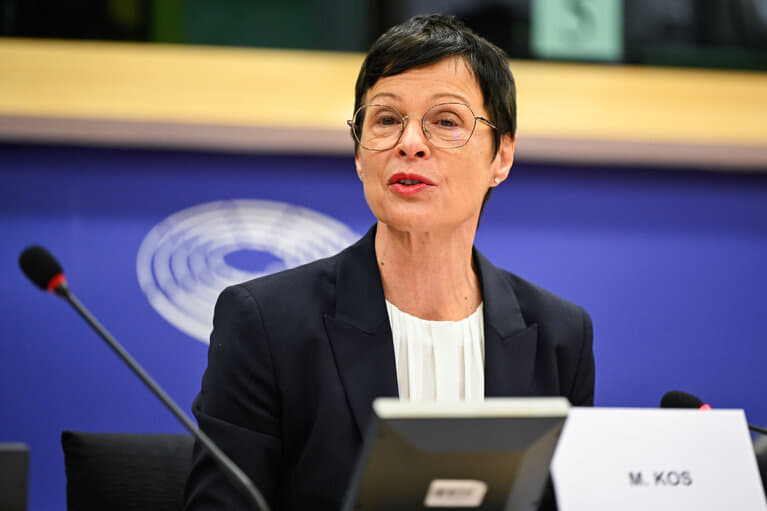
Enlargement Commissioner Marta Kos said the Union is able to take in more members but must resolve open questions. The Commission counts among them stronger mechanisms against backsliding on the rule of law and democracy – up to funding cuts and restrictions on voting rights – targeted instruments for integrating Ukraine’s agricultural sector, and leaner institutions able to decide faster.
What it means for Ukraine
In the short term, nothing changes: the proposals must be adopted by the member states, and for that the unanimity rule still applies. EU leaders intend to discuss the issue at their summit on 15 and 16 October. On 28 October the Commission will present its annual enlargement package – this time with accession roadmaps for Ukraine, Moldova, Montenegro and Albania, setting out which reforms are still missing and an indicative timeline for closing negotiation chapters. Montenegro, with 18 of 33 chapters provisionally closed, is considered the front-runner and is aiming for accession in 2028.
For Ukrainians in Germany the package is above all a signal: Brussels no longer treats Ukraine’s accession as a distant goal but is rebuilding the rules for it. Whether the road actually gets shorter will be decided in the capitals – not least in Budapest.