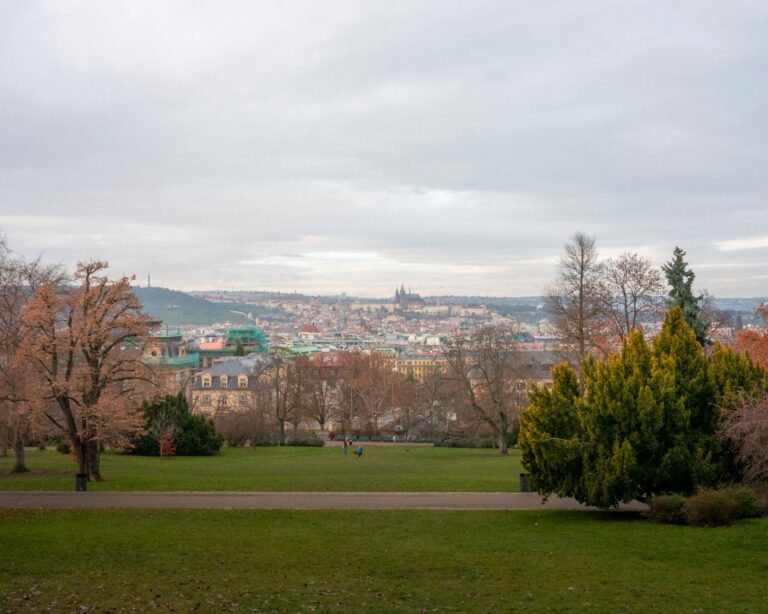
Between 350,000 and 450,000 people, according to the organisers, gathered in Prague’s Letná Park on Sunday to protest against Andrej Babiš’s plan to fund Czech Television (ČT) and Czech Radio (ČRo) from the state budget. The news agency ČTK called it the biggest demonstration in the country since the Velvet Revolution of 1989; police gave no figure of their own. Early reports had spoken of “tens of thousands” (as of the evening of 15 November).
At present every household pays 150 koruna a month for television and 55 for radio, 205 in total or a little over €8. That brings ČT about 6.7bn koruna a year and ČRo about 2.5bn. The bill presented in April by Culture Minister Oto Klempíř scraps the fee. Broadcasters would instead receive a fixed sum from the budget, indexed to inflation but by no more than 5% a year. Media-freedom groups calculate that ČT’s budget would fall to roughly 5.7bn and ČRo’s to just over 2bn koruna, a cut of around 15%. Both would also come under the Supreme Audit Office.
Why “Never again 4:36” became the rallying cry
The slogan of the Million Moments for Democracy movement recalls the night in October when the coalition of ANO, the far-right SPD and the Motorists pushed the amendment through its first reading. Debate was cut short, more than 60 opposition MPs never got to speak, and the vote ended at 4:36am. On 3 November ČT and ČRo staff staged a one-day strike; students, theatres, churches and athletes have since voiced support. Speakers in Letná also demanded that the SPD leave the government.
Babiš rejects the charge. According to Radio Svoboda, he said last week that nobody wants to control public media, let alone nationalise them, and that the aim is to cut costs. ANO’s Radek Vondráček called the organisers “an association of professional agitators” on a TV debate, Euronews reports. Foreign Minister Petr Macinka accused them of turning protest into a business model, according to SRF.
The real dispute is about predictable money, not the fee itself
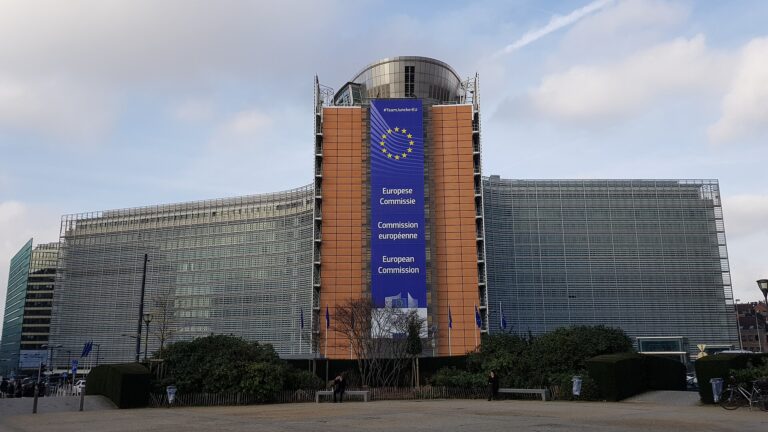
State funding is not a problem in itself in Europe; what matters is whether it is shielded from day-to-day politics. That is where the criticism bites. Article 5 of the European Media Freedom Act requires public broadcasters to have adequate, sustainable and predictable resources, with funding procedures based on transparent, objective criteria set in advance. A sum that any government can renegotiate in the budget does not fit that, argue groups such as the Media Freedom Rapid Response, which have asked the European Commission to assess the bill. SRF reports that the Commission is monitoring developments.
For comparison, each household in Germany pays €18.36 a month, and the need is assessed by an independent commission (the KEF), not by the finance ministry. The level and reform are disputed there too, but the mechanism is designed precisely to insulate broadcasters from political pressure.
Our assessment, with due caution: the likeliest outcome is a compromise in which the coalition scraps the fee but writes the funding formula more firmly into law and softens the cut. If it sticks to the bill as drafted, a long process with Brussels looms, with an uncertain result. The next test of public mood is 17 November, the holiday commemorating the Velvet Revolution. Further readings in parliament are still to come.
Sources: Euronews, Radio Svoboda, SRF, Media Freedom Rapid Response, EU Regulation 2024/1083 (EMFA)