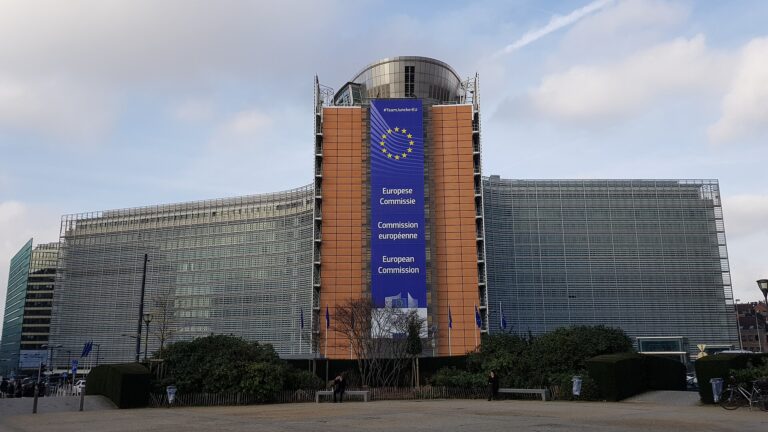
Ukraine and the EU have agreed a roadmap for meeting the interim rule-of-law and democracy benchmarks by the first half of 2027. EU Enlargement Commissioner Marta Kos said so on Sunday after a joint task-force meeting in Brussels that she co-chaired with Ukrainian Prime Minister Serhii Koretskyi. Parliament Speaker Ruslan Stefanchuk also took part, which Kos called “a powerful signal of unity”.
The sides agreed a concrete set of reform deliverables and a path to the benchmarks. Kos did not say which laws are meant. Ukraine expects the remaining negotiating clusters to open by the end of the year, and says the Commission considers the conditions for that met.
The veto is gone, the homework is not
Politically, a lot has moved. After Hungary’s government under Péter Magyar dropped its veto, clusters 2 and 3 were opened on 13 October; Yevropeiska Pravda counts 24 of 33 chapters now open. Still to come are cluster 4 (green agenda and connectivity), sensitive for Poland, and cluster 5 on agriculture, the politically hardest, for which Brussels is exploring a special model.
The real bottleneck is the rule of law. In its enlargement report on 4 November the Commission called Ukraine a “frontrunner” and backed the goal of closing talks by the end of 2028, but rated progress on the rule-of-law roadmap as “limited”. The December 2025 ten-point plan “remains mostly outstanding”, no laws were adopted that significantly advance the anti-corruption framework, and bringing international experts into judicial appointments meets “continued resistance”. Brussels also criticised funding for the “United News” telethon and continued intimidation of journalists.
Koretskyi, in office since July, is pushing for speed: he wants a positive assessment of the interim benchmarks in early 2027 and, under Lithuania’s Council presidency in the first half of the year, provisional closure of seven chapters.
Our assessment, with caution: the timetable is feasible but tight, and depends less on Brussels than on the Verkhovna Rada. Bills on anti-corruption, the State Bureau of Investigation and judicial selection had not been passed, according to reports. Moldova, for which Kos sees technical completion in 2028, sets the pace; Kyiv has no such forecast. And even without a Hungarian veto, Poland, France or Romania could raise new hurdles, above all on agriculture. The Commission’s enlargement forum in Brussels on Monday should show which laws come first.
Sources: Ukrainian Cabinet, Ukrinform, Kyiv Independent, Yevropeiska Pravda