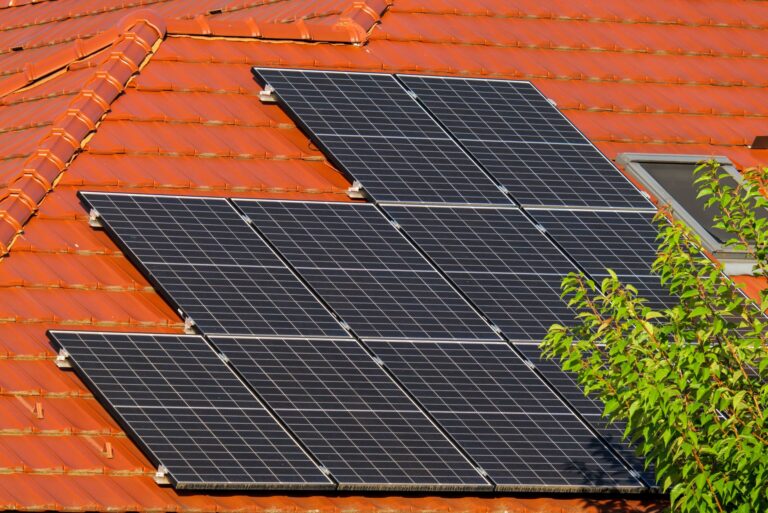
Anyone putting solar panels on a German roof in 2027 may no longer get a fixed feed-in tariff – that is what the government’s draft EEG reform proposes. Nothing has been decided, though, and the Bundestag vote is not expected before November.
The cabinet approved the reform on 29 July. Economy Minister Katherina Reiche (CDU) said: “We are ending the EEG as an all-inclusive package.” The first reading took place on 24 September (Drucksache 21/7867) and the Economic Affairs Committee held its hearing on 5 October. Industry reports put the second and third readings no earlier than the week of 9–13 November; there is no official date. The Bundesrat and the European Commission must then sign off.
What the draft means for new systems
For systems connected from 2027, the fixed tariff would give way to direct marketing, with the power sold on the exchange through a service provider. Small rooftop systems would first receive a transitional payment for up to 36 months – around 5.2 cents per kilowatt-hour according to ADAC, falling twice a year. For comparison, a system commissioned between August 2026 and the end of January 2027 gets 7.70 cents for surplus feed-in up to 10 kWp (12.22 cents for full feed-in). Access to the transitional rule would be phased: systems under 50 kW in 2027, under 25 kW in 2028, and only up to 7 kW in 2029 and 2030. New rooftop systems would also face a permanent cap of 50 per cent of installed capacity on grid feed-in. Plug-in balcony systems are exempt but receive no payment. Figures for the transitional payment differ between sources; the legal text will be decisive.
Existing systems are unaffected. Anyone who is up and running by 31 December 2026 keeps today’s rate for the year of commissioning plus 20 years.
Who wants changes, and how it could end
At the hearing several experts opposed the core of the draft. Carsten Körnig of the solar industry association BSW warned that the plans hit small systems of 2 to 100 kWp and rejected mandatory direct marketing for them. Ursula Heinen-Esser of the renewable energy federation BEE called for the tariff to be kept for small rooftop systems. Thorsten Müller of the Stiftung Umweltenergierecht noted that below 25 kW all support would end once the transition expires, and that state-aid approval for the current EEG runs out on 31 December 2026. The Greens and the Left want to keep the tariff for rooftops; the AfD wants to scrap the EEG altogether. Even within the SPD parliamentary group there is, according to trade portals, still “much need for clarification”; rapporteur Nina Scheer broadly backs the reform.
Our assessment, with due caution: the coalition passing the draft unchanged looks unlikely given resistance within its own ranks and in the Bundesrat. A compromise with a longer or conditional transitional payment for systems under 25 kW seems more plausible. What it will look like is open.
For homeowners, including in Bavaria where a great many roofs already carry panels, the key is the cut-off logic: what counts is commissioning by New Year’s Eve, not the date of order. Rushing a purchase just for the deadline is risky, as installers are often fully booked at year-end, and self-consumption pays off at household electricity prices of around 37 cents per kWh even without a high tariff. An independent energy adviser or the consumer advice centre can run the numbers for a specific roof.
Sources: Bundestag (hib, hearing of 5 Oct), ADAC, t-online, BR24