The average health-insurance top-up contribution (Zusatzbeitrag) is set to stay at 2.9 per cent in 2027. That does not mean your bill stays the same: it is only a reference figure, your own insurer sets the actual rate, and most boards decide in December.
The Schätzerkreis, a panel of the Health Ministry, the Federal Social Insurance Office and the insurers, left the calculated average unchanged in mid-October. Health Minister Carsten Linnemann said: “The average additional contribution rate will remain stable next year.” In practice, the average actually charged is 3.1 per cent, according to Apotheken Umschau, and rates across the 93 funds range from 2.18 to 4.39 per cent. GKV-Spitzenverband chief Oliver Blatt warned that some funds have not yet rebuilt their minimum reserves and may need to charge more. The general rate of 14.6 per cent comes on top; employer and employee each pay half of both parts.
What the gap costs
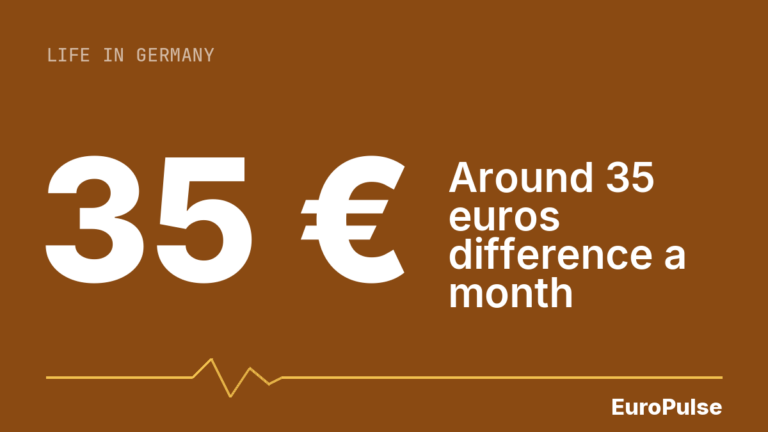
On a gross salary of €3,200 a month you pay half of the top-up. Between the cheapest fund (2.18 per cent) and the most expensive (4.39 per cent) lies a 2.21-point gap, worth roughly €35 a month or about €424 a year to you (our calculation). A 0.2-point rise at your fund would cost about €3.20 a month: small, but for nothing in return.
Two groups need not bother comparing. If you receive Bürgergeld (now Grundsicherung), the Jobcenter pays the average rate, so switching saves nothing. Children are normally covered free through family insurance if one parent is in the statutory system.
The deadline people miss
If your fund raises its rate, you may leave early — up to the end of the month in which the higher rate first applies. For a rise on 1 January, that is 31 January. Membership then ends after the usual two months, on 31 March, and you join the new fund on 1 April. Until then you pay the higher rate. The usual 12-month lock-in does not apply. Miss the deadline and you wait at least a year plus two months.
One detail few know: since the end of July 2026, funds no longer have to warn members by letter before a rise, according to the consumer advice centre. The right to switch remains, but nobody will remind you. Check your fund’s website, the GKV-Spitzenverband list, or at the latest your January payslip.
How to switch: choose the new fund and state on the application that you are leaving because of a rate increase; the new fund handles the cancellation electronically. Compare bonus schemes and service as well as the rate, and ask about Ukrainian- or Russian-language support, which varies between funds.
Our assessment: with the savings package, worth up to €15 billion, calculated tightly and Blatt pointing to further risks, we expect a good number of funds to raise rates at the turn of the year (medium confidence). Mark December in your diary and check your fund’s notice.
Sources: Verbraucherzentrale, Apotheken Umschau, buerger-geld.org, GKV-Spitzenverband