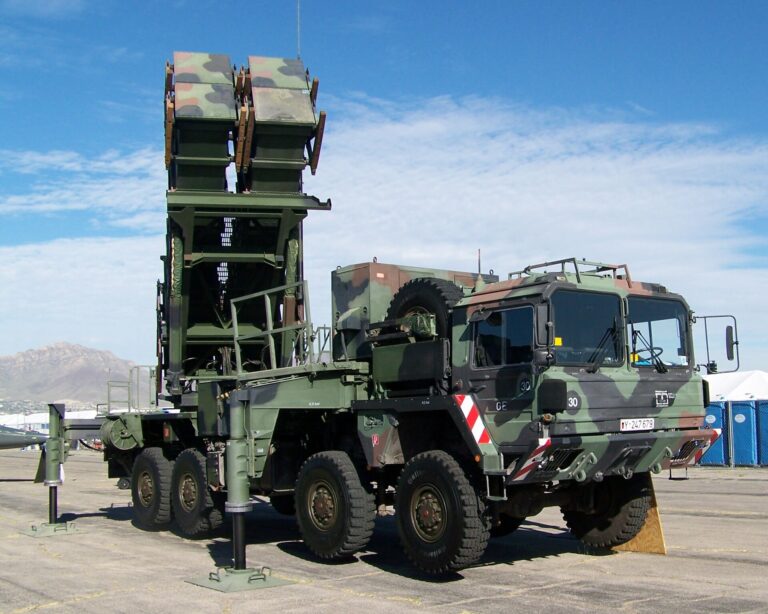
The US State Department on Friday approved the possible sale of 500 Patriot PAC-3 MSE missiles to Ukraine. The package is worth about $2.1 billion and also covers spare parts, logistics and software support for the Patriot systems Ukraine already operates. Lockheed Martin is the prime contractor.
The United States will not foot the bill. According to the department, as reported by Radio Svoboda and Yevropeiska Pravda, the money comes from Canada, Germany and Norway under the JUMPSTART programme, plus Ukrainian funds that are in turn drawn from the EU loan to Kyiv. No extra US personnel are needed in Ukraine, and US military readiness is not affected, it says.
What the approval leaves out
No delivery date is given. This is clearance for a possible sale, not a signed contract with a schedule, and that is the catch. President Volodymyr Zelensky said in October that Ukraine is getting an average of only about 12 Patriot missiles a month this year, with further deliveries awaiting sign-off from Defence Secretary Pete Hegseth. Ukrainian outlet Militarnyi reports that the US handed over just 24 interceptors in the past 90 days. By our own rough arithmetic, 500 missiles at 12 a month would take well over three and a half years.
Scarcity is the reason. The Washington-based CSIS estimated in July that US PAC-3 stocks had fallen from more than 2,300 to fewer than 830. Zelensky says Ukraine is not a priority in the allocation, with the Middle East coming first. Secretary of State Marco Rubio has attributed the delays to balancing commitments to partners against the need to protect US facilities, and said there is no deliberate political order to harm Ukraine.
Who can fix the bottleneck?
In the long run, industry. According to 19FortyFive, the US Army has contracted to raise annual PAC-3 MSE output from roughly 600 to about 2,000 by 2030. Until then it is a question of allocation. Ukraine’s Defence Minister Yevhen Khmara has asked the five big European partners, Germany among them, to hand over 10 per cent of their Patriot and IRIS-T interceptor stocks in exchange for later deliveries.
The European Commission approved €6.1 billion for Ukrainian defence purchases in September, €3.2 billion of it under exemptions from EU procurement rules, including American PAC-3 missiles. Spokesman Thomas Regnier stressed the urgency, but on 28 October the Commission could not say whether it had raised the delays in Washington.
Our assessment: the approval is mainly a political signal and a confirmation by donors, Germany included. It changes little for a winter in which Russia usually hits the energy system hard, unless deliveries speed up. That is a judgement, not a firm forecast.
Earlier coverage: ballistic missile attack on Kyiv. As of 22:00 CET, 30 October 2026.
Sources: Radio Svoboda, Yevropeiska Pravda, Ukrinform, Militarnyi, US Department of State / DSCA