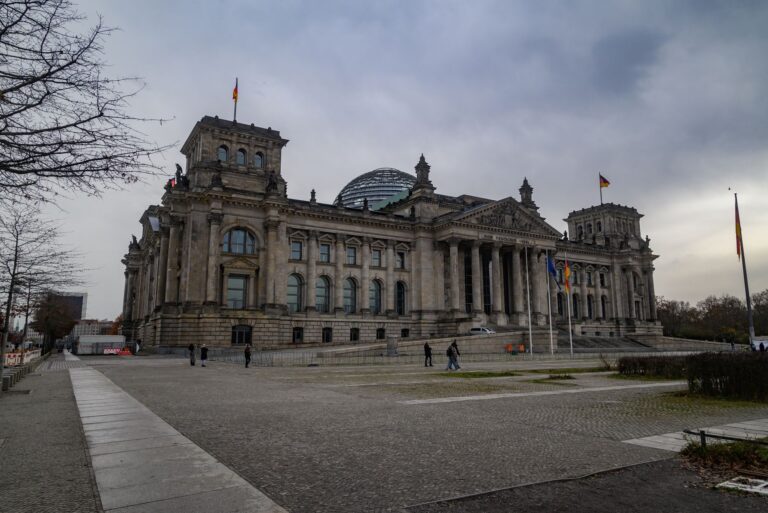
The German government puts its total support for Ukraine since 24 February 2022 at about €100.9 billion. The figure comes from its answer to a parliamentary question from the AfD group (Bundestag document 21/8872), reported by the Bundestag on 6 November. The text itself gives no grand total; it is the sum of two items.
The first is more than €43.3 billion in bilateral civil aid, which Ukrinform says includes support for Ukrainians living in Germany. The second is roughly €57.6 billion in military support, either already delivered or committed for coming years. Ukrinform gives the cut-off as 30 June 2026.
What the number does and does not say
It is not a cash balance. Part of the military money is earmarked for the future, and the “civil” line mixes reconstruction aid with spending inside Germany. Anyone reading it as “wired to Kyiv” is misreading it. For a year-by-year split, the government points to its quarterly list, “Deutschland hilft der Ukraine”.
On how the money moves, Berlin says Ukraine orders equipment directly from companies, Germany is not a party to the contracts and pays for purchases after expert and economic review, within available budget funds. Payments go only to the firms, on contract milestones and after confirmed delivery. Proceeds from frozen Russian central bank assets went into procurement projects: about €100 million in 2024 and €217.5 million in 2025.
Some of what the AfD asked remains unanswered. According to Nordkurier, the government declined to name companies or contract details, citing the security of Ukraine and of company staff. It also did not say which German body checks invoices or whether orders can be stopped. On veterans’ programmes it says checks found “no significant deficiencies”.
Where the curve is heading
Politically, the reply repeats the case made by the CDU/CSU–SPD coalition: the security cost of a Russian victory would far exceed the cost of today’s aid. The trajectory is already visible. For 2027 Berlin plans about €11.6 billion, according to a Reuters report cited by Slovo i Dilo, then €8.5 billion a year in 2028–2030. Finance Minister Lars Klingbeil linked the drop partly to expected EU mechanisms such as loans. The figures are not final; the Bundestag is due to pass the budget by year-end.
The Kiel Institute’s Ukraine Support Tracker (August 2026 update) shows how much Europe now carries: European institutions allocated nearly €11 billion in May and June, mostly through the €90 billion Ukraine Support Loan. Germany alone committed €700 million in bilateral military aid, the most of any country in that period. Researchers also warn: “Europe continues to depend on the access to US weapons systems”, said Federico Mellace of the tracker team.
Our assessment: the “€100 billion” mark will mostly serve as an argument, used by the AfD against the aid and by the coalition in its defence. More solid than the headline sum is the question of what replaces German money after 2027. If Germany’s share falls as planned, much depends on EU loans arriving in the expected amounts. That cannot be said with confidence today.
Sources: German Bundestag (hib 908/2026), Nordkurier, Ukrinform, Kiel Institute (idw), Slovo i Dilo