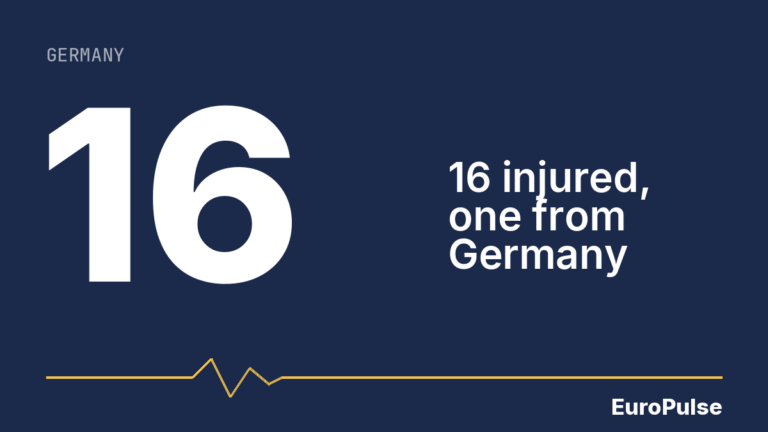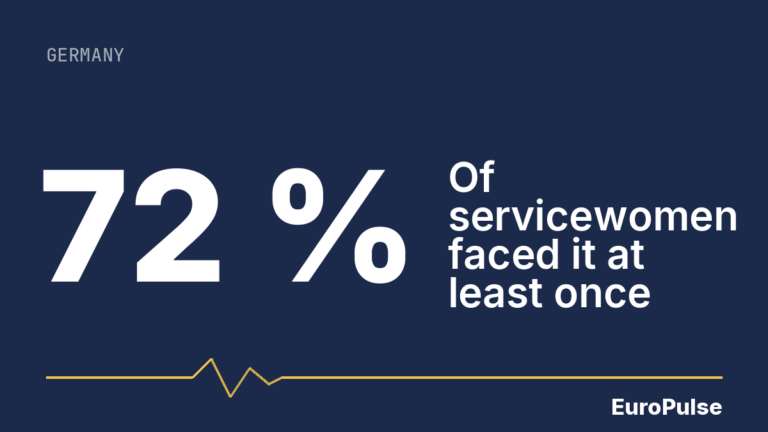
The German Defence Ministry on Wednesday presented the first large “dark field” study of sexualised misconduct in the Bundeswehr. Some 72 per cent of women and 31 per cent of men in uniform say they have experienced verbal harassment at least once during their service. Defence Minister Boris Pistorius (SPD) told reporters after the Bundestag defence committee met: “There is zero tolerance for sexualised misconduct in the Bundeswehr.”
The research report comes from the Bundeswehr’s Centre for Military History and Social Sciences (ZMSBw). It contacted about 45,000 service members of all rank groups; roughly 18 per cent replied, and more than 8,100 questionnaires were analysed, backed by over 60 individual and group interviews. The ministry says the sample is representative in its make-up.
Who is affected
Over the past 12 months, 38 per cent of women and 16 per cent of men report verbal misconduct such as lewd remarks. Visual misconduct affected 7 per cent of women and 5 per cent of men; physical misconduct 9 per cent of women and 3 per cent of men. Sexualised violence was reported by 2 per cent in each group. Young women in the lower ranks are hit hardest, mostly under 25 according to the trade outlet Soldat & Technik; ship crews are above average, combat units no different from the rest. Non-heterosexual men are over-represented too. Perpetrators are mostly men, whatever the victim’s gender.
A rough editorial calculation shows the scale: at the end of 2025 about 25,200 women served in the forces, 13.7 per cent of the total. Thirty-eight per cent of that would be around 9,500 women verbally harassed in a single year. This is our back-of-the-envelope estimate, not a figure from the study.
Hardly anything gets reported
Depending on the type of misconduct, the unreported cases are three to six times as many as the reported ones. About one in three cases of sexualised violence against women is reported, one in five verbal cases and one in six visual ones. The most common reason for silence is not wanting to attract attention; second is distrust of the reporting system and military structures. Only 28 to 45 per cent say the reporting process works well, and only 49 per cent know about counselling services. Yet 67 to 81 per cent of those who reported would do so again.
The study lands amid rising reports. According to Der Spiegel, as relayed by Newstime, first reports rose from 385 in 2023 to 395 in 2024 and 430 in 2025. In March, the parliamentary commissioner for the armed forces, Henning Otte (CDU), cited 370 violations of sexual self-determination for 2025. The figures come from different counts and cannot be compared directly. The Bundeswehr itself notes that more reports can mean growing trust in the channels or a real problem.
The ministry announced an action plan of 34 measures in three areas: protection and support, prevention, and investigation and sanctions. Its core is a counselling service called HELP at the Centre for Leadership Development and Civic Education, working outside the chain of command since 1 November, initially seven days a week and later around the clock (0800 5432100, free of charge in Germany). Specialist military disciplinary lawyers are planned, along with changes to the disciplinary code to give victims more information rights. Responsible bodies will report to the minister every six months.
The Greens say that is not enough. Security spokeswoman Sara Nanni called for an external reporting office outside units, arguing that otherwise victims can only report to superiors and the close-knit community makes acting harder. She also sees a recruitment upside: women may find the Bundeswehr more attractive once they see the problem is being tackled.
Our assessment: the plan targets the right places, but trust will decide. While under half of personnel know the counselling exists, part of the likely rise in 2026 reports may simply reflect more visibility, not more incidents. The push to recruit more women (13.7 per cent now; targets of 20 per cent in combat units and 50 per cent in the medical service) depends on that. How soon an external reporting office could arrive remains open. Meanwhile the Bundeswehr is examining a case in Medical Regiment 1 in Weissenfels: ten people are affected and five cases went to prosecutors.
Sources: BMVg, ZDFheute, Soldat & Technik, Bundeswehr, Newstime