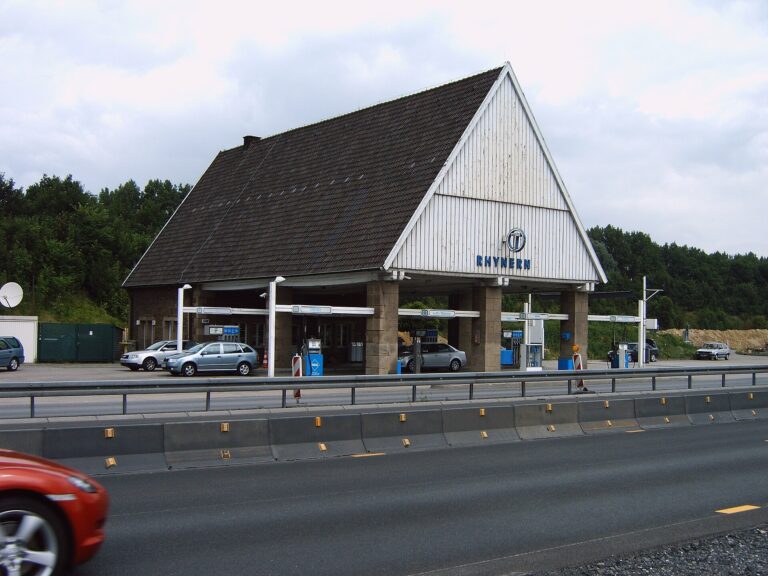
Federal Economy Minister Katherina Reiche (CDU) wants to exempt petrol stations on motorways from the planned price cap for petrol and diesel. That is reported by the “Handelsblatt” and the news agency dpa, citing ministry circles, as tagesschau.de reported on Saturday, 21 November. The cap is, by contrast, to apply to motorway service areas – that is, petrol stations near motorway exits.
The justification given in ministry circles is that petrol stations on motorways have higher costs on average than other petrol stations because they pay higher lease fees and have to be open around the clock. WELT also reports on the planned exemption. In the editorial team’s assessment, the exemption is likely to make price comparisons harder for travellers: anyone filling up on the motorway could continue to pay significantly more than at a service area a few hundred metres off the route.
Cabinet to decide on 2 December
According to tagesschau.de and WELT, Reiche’s ministry has sent a new draft for the price cap into the first round of internal government coordination with the Chancellery and the Finance Ministry. On 2 December the cabinet is to adopt the bill and the accompanying statutory order that sets out the calculation of the maximum prices for petrol and diesel.
The price cap is to replace the previous fuel discount. Because of the high fuel prices following the Iran war, the federal government had cut taxes; that arrangement still applies until the turn of the year. According to the coalition committee, the cap is to be made possible by law from January for twelve months, but the statutory order for it is initially to apply for only three months; whether it will be extended after that is to be reviewed before it expires. At the coalition committee on Tuesday, the leaders of the CDU, CSU and SPD agreed that the cap would be “activated” on 1 January.
Reiche’s first draft had been judged unsuitable by the SPD because it set high hurdles for it to take effect. According to the Berliner Zeitung, an earlier bill by Reiche provided that the cap should apply only if price increases for diesel or petrol in three consecutive weeks were more than five percentage points above the average of the other EU countries – a condition that had never been met in recent years.
Why the ministry insists on security of supply
Reiche’s ministry said that above all security of supply had to be established. “For what use is a low price if there is nothing left to buy at the petrol station because selling at that price would simply be uneconomic?”, a spokesperson said, according to tagesschau.de and WELT. The federal states are therefore to be given the possibility of deviating from the nationwide cap if they have different costs for procuring and transporting petrol and diesel.
The price cap is not intended to be targeted relief for citizens, the ministry argues according to WELT’s report. Other measures would be needed for that, such as income-dependent direct payments into bank accounts. However, the federal government is currently not yet technically capable of that.
It remains open how large the price differences will actually be. The concrete level of the cap has not yet been fixed; the calculation method is to be laid down in the statutory order that the cabinet is to discuss on 2 December. For motorists this means: from January the fuel discount will be dropped, and whether and to what extent the new cap then limits prices will be decided only with the shaping of the order.