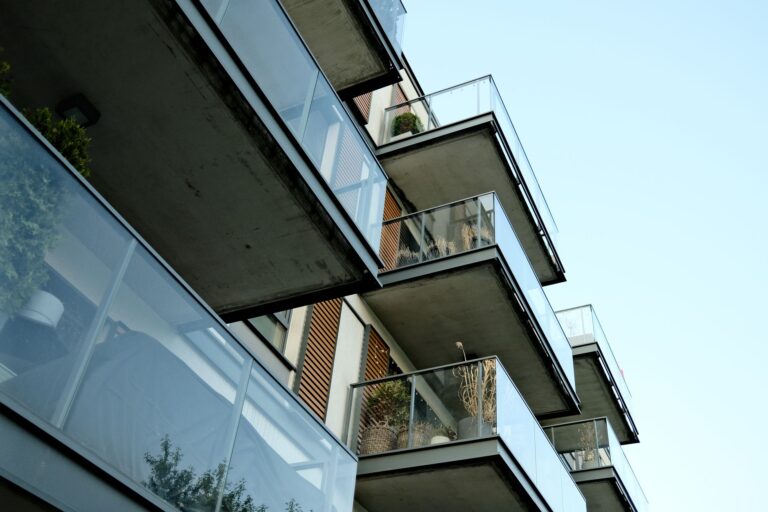
Tenants in Germany may put solar panels on their balcony, and landlords can hardly stop them. The Federal Court of Justice (BGH) has reaffirmed this in a case from Saxony (ref. VIII ZR 248/25): a changed look of the façade is not enough to refuse a plug-in solar device.
The right comes from section 554 of the Civil Code (BGB). Since October 2024, a tenant can demand that the landlord permit alterations that serve “power generation by plug-in solar devices”. That does not apply if the change cannot reasonably be expected of the landlord “even taking the tenant’s interests into account”. Any agreement to the tenant’s disadvantage is void.
What happened in Saxony?
A housing cooperative had allowed its tenant a balcony power plant only with conditions: the panels were to hang below the railing and not spoil the building’s appearance. The man instead fixed them visibly to the outside of the balcony. The cooperative sent a warning and sued for removal. The local court in Riesa sided with it, the regional court in Dresden with the tenant. The BGH rejected the cooperative’s appeal, so the Dresden ruling is final.
There is a small discrepancy on the date: Tagesschau and beck-aktuell report on 26 November, while Berliner Zeitung gives 25 November as the day of the decision. According to it, the written reasons had not yet been published.
Why the cooperative’s objections failed
Formally, the tenant had no permission for this exact mounting. Even so, the cooperative could not demand removal: under section 554 it would have had to allow this mounting too, and relying on the missing permission breaches good faith (section 242 BGB), in the court’s view. The three objections, one by one:
- Appearance: a mere change in how the building looks does not cross the line into unreasonableness. Only if the impairment in the individual case carries particular weight may a landlord refuse.
- “Patchwork”: according to the BGH, lawmakers had this in mind and accepted it; solar panels are part of modern living.
- Glare: an abstract risk is not enough. Disturbance to third parties must be proven concretely and be significant.
A resolution by the cooperative’s representatives banning balcony solar on outer sides did not help either. Cooperative tenants can invoke the mandatory tenant-protection rule.
What this means if you want panels
This is not a free pass. Anyone who mounts panels without consent risks a dispute, even if they may win in the end. The safer route is to ask in writing before the panels go up. If the landlord objects only because of looks, you can cite VIII ZR 248/25. A house rule or lease clause banning balcony solar across the board cannot, on the wording of the law, override the statutory right. Local tenants’ associations (Mieterverein) offer advice. Registering the device in the Marktstammdatenregister remains a separate duty.
What stays open, according to Berliner Zeitung, is which conditions are allowed, such as structural or liability-insurance proof or installation by a professional. Deutsche Umwelthilfe is fighting Vonovia over this at the Higher Regional Court in Hamm. The local court in Osnabrück held in October 2026 that slight extra shade is acceptable. Also, the ruling covers a residential case, not commercial leases.
Our assessment, with moderate confidence: refusals based only on appearance are unlikely to survive in court. The fight will move to conditions and safety. Clarity will come only with the written reasons. This is not legal advice.
Sources: Tagesschau, beck-aktuell, Berliner Zeitung, Gesetze im Internet (§ 554 BGB)