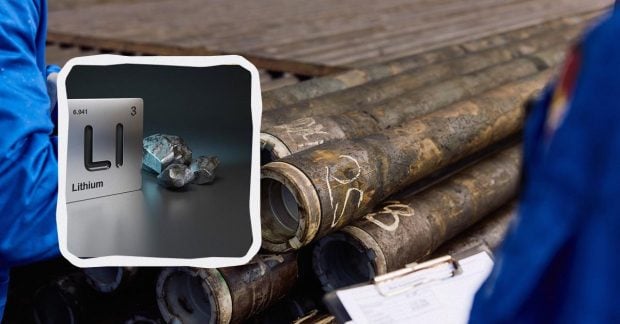
As the Ukrainian news agency UNIAN exclusively reports, the largest lithium source in Europe has been discovered in Germany at a depth of four kilometers. The valuable mineral is dissolved in a salt solution, a so-called brine reservoir, and must be pumped to the surface using pumps. This discovery could have significant implications for Europe's raw material supply, particularly in light of the growing demand for lithium for batteries in electric mobility and energy storage.
According to UNIAN, this is a significant deposit that, due to its location and characteristics, presents special challenges for development. Extraction from great depths requires specialized technological solutions to recover the lithium economically and in an environmentally friendly manner. Experts point out that such deep deposits have hardly been developed in Europe so far, making the discovery a potential turning point for regional lithium production.
The economic feasibility of extraction is currently being intensively studied. As UNIAN reports, involved companies and research institutions are examining the profitability and sustainability of the project. Factors such as the concentration of lithium in the brine, extraction costs, and environmental impacts play a central role. The European Union (EU) has increasingly emphasized the importance of critical raw materials like lithium for the green and digital transformation in recent years, underscoring the strategic relevance of such finds.
Compared to other lithium sources worldwide, which are often located in salt lakes or hard rock deposits, the German discovery offers an alternative source of supply. This could reduce Europe's dependence on imports, for example from South America or Australia, and diversify supply chains. However, technical and regulatory hurdles still need to be overcome before commercial use is possible.
The discovery highlights the growing importance of domestic raw material extraction in Europe. Given global uncertainties and increasing demand for battery materials, such finds are gaining strategic value. According to UNIAN, further investigations and pilot projects are expected to follow to fully assess the potential of the source. The results could, in the long term, help strengthen Europe's position in the competition for future technologies.