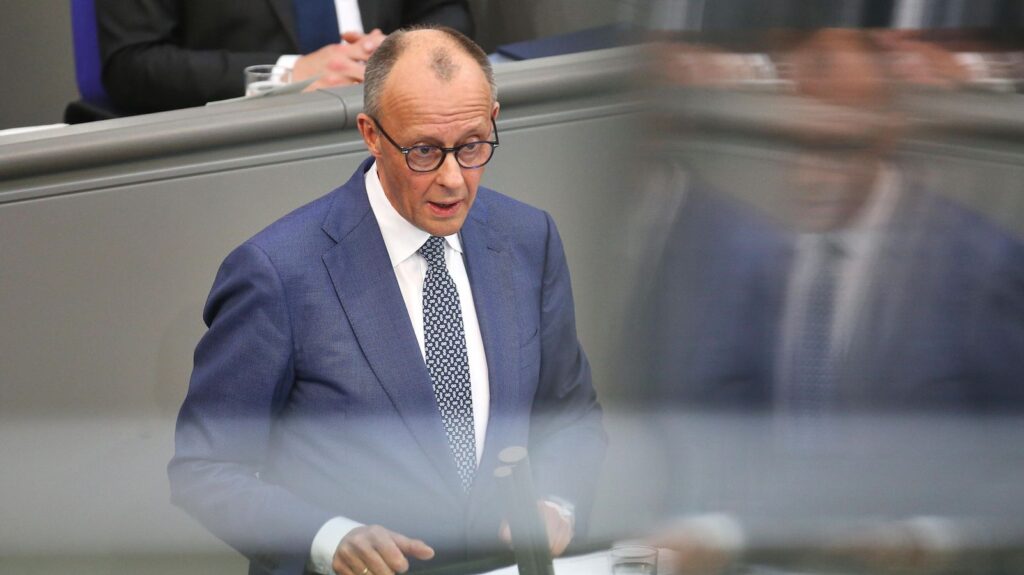
German Chancellor Friedrich Merz used his first major policy address to parliament to deliver a clear message: Europe must start acting with more self-assurance. His call for a more confident European Union received broad support in the Bundestag, even as he remained notably vague on pressing domestic issues.
“We should no longer sell ourselves short,” Merz declared, according to an analysis by Bavarian Broadcasting. The CDU politician urged the EU to finally project its economic and political strength abroad with conviction. He pointed to other countries’ dependencies on Europe, stating, “Others are dependent on us too—not just us on them.”
This firm foreign policy stance stood in stark contrast to Merz’s cautious approach to domestic debates. His speech lacked concrete plans to tackle immediate challenges like the energy crisis or social tensions, instead focusing on general appeals for unity and reform readiness.
The loudest parliamentary reaction came when Merz launched sharp attacks against the far-right Alternative for Germany (AfD). His criticism of right-wing populist positions drew the day’s most enthusiastic applause—a sign of the ongoing polarization within Germany’s party system. This clear demarcation from the right distinguishes Merz’s governing style from previous CDU leaders.
Alongside his parliamentary address, Merz demonstrated his foreign policy engagement by writing to new Chilean President José Antonio Kast, emphasizing the importance of German-Chilean partnership based on democratic values. This diplomatic gesture underscores Merz’s focus on international relations.
Behind the scenes, concrete political processes continue. Parliament is preparing to review civil defense systems—a topic gaining significance amid multiple crises. Whether Merz will soon present more specific proposals here remains to be seen.
The government statement marks a significant moment for Merz’s chancellorship, revealing a politician determined to set clear international accents while still searching for the right domestic balance. For citizens, this could mean Germany might act more assertively at the European level while national reforms potentially advance more slowly.
The coming months will show whether Merz can translate his foreign policy rhetoric into concrete action—and whether he can develop convincing solutions for urgent domestic challenges. His appeal for European confidence may find sympathy, but must prove itself in the reality of international negotiations.