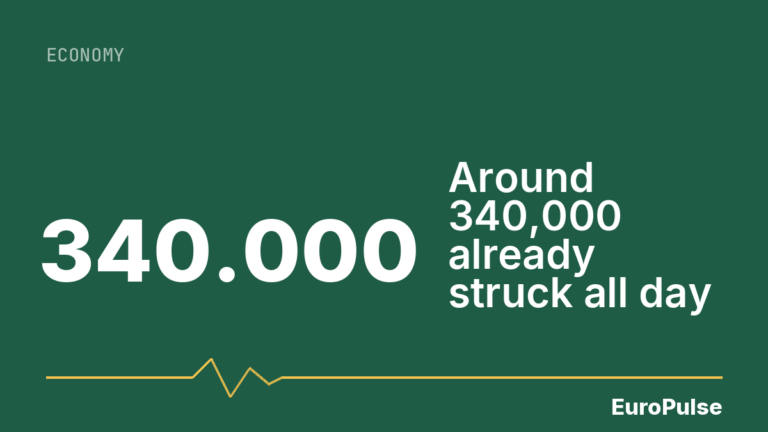
IG Metall and the employers meet for a fourth round of talks in Mannheim on Wednesday. Until then the union is raising the pressure: new full-day warning strikes are announced for Tuesday, and at Opel in Eisenach the entire workforce will down tools for 24 hours for the first time in the plant’s history. By the union’s count, around 340,000 employees have so far joined full-day strikes.
The numbers show how far apart the sides are. IG Metall wants 5 per cent more pay for roughly 3.7 million workers over twelve months, plus site and job security guarantees, profit-sharing in profitable firms, a social component for low pay grades and higher trainee pay. The employers, represented by Südwestmetall and Metall NRW, are offering, according to the union, a one-off payment of a few hundred euros in summer 2027 that can be suspended under certain conditions, and 1.3 per cent more from summer 2028. According to dpa, the term would be 26 months.
Why this round is about more than percentages
Behind the dispute is the crisis in the sector, above all in carmaking and mechanical engineering, where jobs are being cut. Employers want it to be easier to deviate from collective agreements, but to negotiate those deviations only with works councils, not the union. According to IG Metall, that includes a 40-hour week and cuts to extras such as Christmas pay. The union counters that deviations are acceptable only in justified cases, in return for binding commitments on investment and jobs. “Blanket savings programmes to protect returns and wage sacrifice are not something we will accept,” IG Metall chair Christiane Benner said on 6 November.
Gesamtmetall president Udo Dinglreiter called the escalation “completely unnecessary and harmful”, adding that a new model would “certainly not emerge from day-long strikes”. Benner accused the employers on 12 November of having “mixed concrete”, and said on Monday: “The employers now have the chance to put an offer on the table.”
Both sides have figures to argue with. IG Metall points to inflation of 2.8 per cent, with up to 3.3 per cent forecast for 2027; 1.3 per cent only from mid-2028 would mean a noticeable real-terms pay cut. The employers point to the state of their firms. The union itself concedes that this varies widely: in its own survey, 46.2 per cent of 267,000 respondents rated their company’s situation as good or very good.
Three roads out of Mannheim
We see three plausible outcomes, none of which can be predicted reliably. First, the employers table an improved offer on Wednesday, with an earlier step and a firm rather than revocable one-off payment, which could open the way to a pilot deal like the one in 2024. Second, the deadlock continues and the union widens the full-day strikes, which are seen as the last step before a ballot of members and an open-ended strike; the last big round of such strikes was in 2018, with about 500,000 taking part at 250 firms. Third, the parties settle on a minimal compromise and push the hard question of deviations into plant-level talks. Judging by both sides’ behaviour so far, the first looks least likely and the third most likely if both want to save face.
For people in the sector, including many Ukrainians in production and logistics, the practical point is this: if your employer is covered by the collective agreement, you get the outcome either way, but IG Metall pays strike pay only to its members. Your works council can tell you whether your firm is covered.