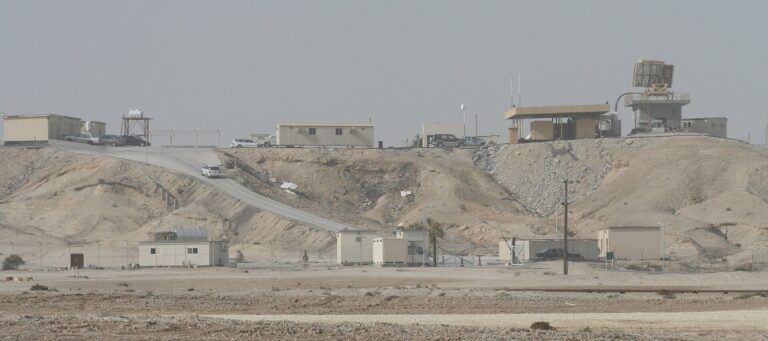
Iran’s Revolutionary Guards say they have again attacked a US radar facility at the Al-Riffa helicopter base in Bahrain. According to the Iranian state broadcaster Press TV on Sunday, six drones were fired at the US air-defence radar system. Bahrain rejected the account on Sunday, 15 November: Bahrain’s military said its air defences had intercepted and destroyed several Iranian attacks before they reached their targets. There was initially no independent confirmation of either account.
The news agency AFP reported, citing its journalists in Bahrain, explosions at around 4.00 a.m. local time and a further series of detonations at around 6.30 a.m. Sirens wailed and the authorities urged the population to seek shelter. The Interior Ministry published two missile alerts on the platform X and called on people to “stay calm and go to the nearest safe place”. The US regional command Centcom initially made no comment on the incident.
Two attacks in three days
It is already the second incident of this kind within a few days. On Friday the Revolutionary Guards had stated that they had attacked a US early-warning radar in Bahrain. The US military said at the time that it had intercepted two Iranian drones without any damage being caused. According to Centcom, Friday’s attack also had no consequences. After a longer period of calm, Bahrain thus became the target of Iranian attacks twice within three days.
The Revolutionary Guards justified the renewed attack with recent US military strikes in southern Iran. According to sources in Tehran, US forces had repeatedly targeted radar installations and missile launch sites on the Iranian coast in recent months, most recently facilities on Qeshm Island in the Strait of Hormuz. According to the news agency Fars, the Revolutionary Guards declared that the strait was “closed, and any aggression by the American enemy will be answered even more harshly and forcefully”.
What the Strait of Hormuz means for world trade
As a close partner of Washington and the location of the headquarters of the US Fifth Fleet, Bahrain is of particular strategic importance. The Foreign Ministry in Manama declared that the country refused “to turn its territory into an arena for settling scores” and held Iran fully responsible for the attacks and their consequences.
The conflict began at the end of February, when Israel and the USA launched air strikes on Iran. In response, Iranian forces effectively blocked shipping in the Strait of Hormuz for a long time with threats and attacks; a large part of the world’s oil and liquefied gas transport passes through it. For several months the US Navy has been trying to restore trade through the strait by providing escorts for civilian ships. In return, the USA imposed a blockade on Iranian ports. For consumers and businesses in Europe the consequences are indirect but noticeable: delays in shipping and higher insurance premiums can put pressure on energy prices.
The latest incidents fall in a phase of diplomatic efforts towards an agreement between Washington and Tehran to end the war, which has lasted almost nine months. There has so far been no breakthrough. According to the news agency Reuters, US President Donald Trump has signalled to his advisers in recent days that he could refrain from further attacks on Iran if Tehran and the Iran-allied Huthi in Yemen avoid new provocations. According to the report, Trump is sticking to the US blockade of Iranian ports.
Meanwhile, Saudi Arabia also reported attacks on its territory on Sunday. The military coalition led by Riyadh said Saudi air defences had destroyed two ballistic missiles aimed at Riyadh. “The air defences intercepted and destroyed two ballistic missiles,” coalition spokesman Turki al-Maliki declared on X. In addition, three drones were shot down in the east of the country. Al-Maliki blamed the Yemeni Huthi militia for the missile attack. According to the United Nations, more than 1,600 people have been killed in Yemen since the fighting flared up again, and more than 300,000 have had to leave their homes.
The editorial assessment: As long as the negotiations make no progress, the conflict is likely to follow a pattern of US attacks on Iranian surveillance and weapons systems, Iranian retaliatory actions and disruptions to shipping. What is decisive for the region is the security of the sea routes and the question of whether Washington responds militarily to the attack on Bahrain.