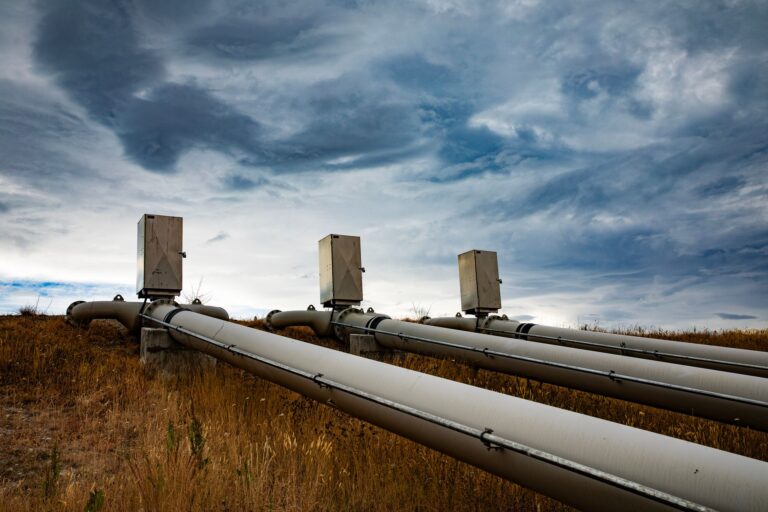
The spokesman for the Russian president, Dmitry Peskov, considers the resumption of Russian gas supplies to Europe through pipelines on Ukrainian territory to be currently unworkable. This was reported by the news outlet Ukrainska Pravda, citing the Yevropeiska Pravda section and the Russian news agency TASS.
Peskov commented on Monday, 2 November, on a report by the Wall Street Journal. The “situation on the ground” indicated that plans to resume gas transit from Russia through Ukraine were currently not possible, he said. At the same time, he qualified this by saying that a resumption of supplies could hardly be foreseen even in the future. Further plans depended on the wishes of buyers and the capabilities of suppliers.
What lies behind the push from Washington
According to the Wall Street Journal, the US supports a rapid resumption of Russian natural gas supplies to Europe via pipelines through Ukraine. The paper cites US, European and Ukrainian officials. According to the report, the idea was raised by the US envoys Jared Kushner and Steve Witkoff during trips to Moscow and Kyiv in September. The plan is to sell Russian gas through a US intermediary and thereby circumvent European sanctions; for US investors this could be lucrative.
According to the Wall Street Journal, the US negotiators assume that Russia’s return to the European gas market would give the Kremlin chief Vladimir Putin a strong incentive for an agreement. Ukraine, in turn, could earn revenue from transit fees. White House representatives had proposed that Russia deposit the proceeds from gas sales to Europe in an account in a third country so that the Kremlin cannot use the money to finance the war. According to the report, the US was also trying to win the EU over to the proposal.
Brussels sticks to the phase-out
The European Commission had stated on 28 October that the EU does not plan to resume Russian gas imports even after the end of Russia’s war against Ukraine. The phase-out is legally enshrined: under current EU law, all purchases of Russian natural gas supplies must be fully phased out by the end of 2027. The European Parliament adopted the regulation in December 2025, and the member states gave their final approval to the plan to block Russian gas imports until the end of 2027 on 26 January 2026. Slovakia and Hungary voted against it. The REPowerEU regulation, which governs the gradual phase-out of Russian pipeline gas and liquefied natural gas, was published in the Official Journal of the EU on 2 February 2026. The ban on short-term gas contracts with Russia has been in force since 17 June.
According to the Wall Street Journal, European representatives largely reject the idea of a return of Russian gas to their markets. A senior representative of a northern European country told the paper that a resumption of Russian gas purchases contradicted everything Europeans were fighting for. A senior representative of a large European country compared the proposal to the actions of former British Prime Minister Neville Chamberlain, who handed Czechoslovakia over to Hitler in exchange for economic arrangements.
According to the report, the US is also considering a possible resumption of operation of the Nord Stream pipelines as a potentially important building block of a broader agreement – not only to end the war in Ukraine but also to settle long-standing disputes between Russia and America’s European allies. There had already been reports that the US had proposed to European countries that part of the Russian state assets frozen after the start of Russia’s war of aggression be released and transferred into a financial structure under Washington’s control.
The timing of the push is also linked to Ukrainian attacks on Russian oil refineries. According to the Wall Street Journal, the plan had initially been postponed last month after Ukraine, under pressure from US President Donald Trump, had unilaterally suspended attacks on Russian refineries for almost two weeks. However, Russia continued its attacks on Ukrainian energy infrastructure. After the resumption of Ukrainian attacks on Russian refineries, the proposal for a broader energy ceasefire came back on the table ahead of the trilateral talks planned for mid-November.
Editor’s note: Whether and in what form the talks will actually take place in mid-November is not clear from the available sources. Peskov commented on the gas proposal; he gave no details on the consultations about an energy ceasefire.