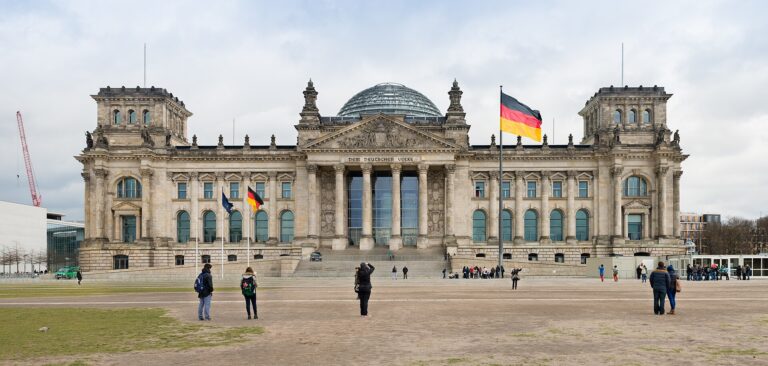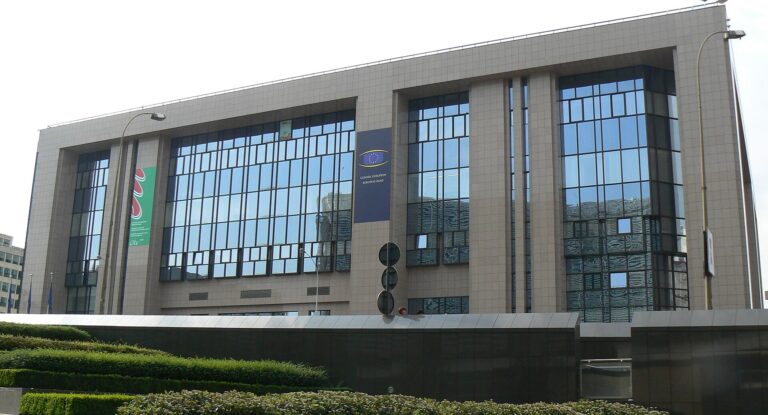
At the EU summit in Brussels, the 27 heads of state and government are negotiating this Thursday over the European Union’s Multiannual Financial Framework (MFF) for the years 2028 to 2034. Federal Chancellor Friedrich Merz (CDU) is leading the group of net contributors, which wants to cut the European Commission’s draft budget by several hundred billion euros, as Der Spiegel writes on Thursday in its morning briefing. There will be no agreement this Thursday, 15 October.
The European Commission had called for a budget of more than 2000 billion euros for the seven years in its draft, reports Wirtschaftswoche. The so-called “frugals” protested against this – those countries that pay more into the EU budget than they get back. Merz had invited this group to Berlin in September to develop a joint strategy. Austria, the Netherlands, Denmark, Finland and Sweden accepted the invitation. France, itself a net contributor, did not take part: Paris wants a larger EU budget and to finance it through new taxes on digital companies and Eurobonds.
In a joint letter from the six countries to the Irish Prime Minister, who currently holds the EU Council Presidency, they insisted on a cut of around 400 billion euros – about 20 per cent. Ireland then presented a compromise proposal that provides for a cut of 159 billion euros. For Merz, that is too little: the proposal is “no basis for further discussions”, he was quoted as saying. According to Wirtschaftswoche, sources in the federal government say they are demanding a “horizontal cut of several hundred billion euros” – i.e. savings in all areas.
Where the axe should fall – and where not
The Irish proposal provides for savings primarily in research, innovation and competitiveness. Agricultural spending and cohesion policy, which balances economic and social differences between regions, remain almost untouched – although these two areas make up more than half of the EU budget, as Wirtschaftswoche writes. Germany also wants to save here. Italy, Spain, France and Poland are resisting, fearing the wrath of the agricultural lobby and votes for right-wing populists in upcoming elections, as Der Spiegel reports.
Irish European Affairs Minister Thomas Byrne defended the proposal at the weekend: a “very large majority” of member states had demanded that national allocations for agriculture and cohesion not be cut further. “Nobody will get everything they wanted. But we believe there is something in it for all member states,” Byrne said, as Tagesspiegel reports.
In the European Parliament, the proposed cuts in the research sector meet with incomprehension across party lines. In a joint statement by Christian Ehler (CDU) and René Repasi (SPD), according to Tagesspiegel, the EU must close the innovation gap as quickly as possible. The “Horizon Europe” programme must therefore not be cut. “Technological development in quantum computing, AI, new materials, biotechnology and photonics – all of this affects not only our competitiveness and the prosperity of our people, but also our security,” the MEPs write. The chairman of the CDU/CSU group in the European Parliament, Niclas Herbst, also opposes the Chancellor’s line: “Blanket cuts are not answers to the challenges of our time,” Wirtschaftswoche quotes him as saying. “Anyone who expects more responsibility from Europe must also create the financial conditions for it.”
What the dispute means for Germany
The Irish proposal is rejected in Berlin also because it would increase Germany’s contribution by around half compared with the current financial framework. Currently, Germany pays around 40 billion euros more to Brussels than it gets back from EU coffers. Under the Irish proposal, this would be around 60 billion euros in future, reports Wirtschaftswoche.
On the so-called own resources – taxes that the EU can levy itself – a compromise is emerging according to diplomatic circles. A new tax on electronics, a digital tax and a special tax for large companies are under discussion. The federal government strictly rejects the latter. The other own resources could be discussed, it is said. However, with the digital tax, which would mainly hit US internet corporations, it is questionable whether it would bring more trouble than benefits – because of US President Donald Trump’s threat to impose punitive tariffs on the EU.
The 27 heads of state and government are pressing to adopt the budget this year. The reason is the elections in several important member states in 2027: election campaigns will be underway in Poland, Italy and especially France, and nobody believes that the tough distribution struggle can be brought to an end at the same time. At the current summit, each will first set out their position, according to sources in the federal government. A special summit is already planned for November to seek consensus. EU Council President António Costa is then to moderate the negotiations between the states.
In addition to finances, the heads of state and government are also dealing with trade with China. The Commission is expected to be tasked with developing sharp instruments to be able to put Beijing in its place if necessary. A majority for a tougher course is emerging after Germany too has moved onto this line.
Editor’s note: An agreement on the MFF is not to be expected this Thursday. Whether it will succeed this year is open – Irish European Affairs Minister Thomas Byrne had recently expressed optimism according to Tagesspiegel, but given the reactions to the paper, this is considered unrealistic.