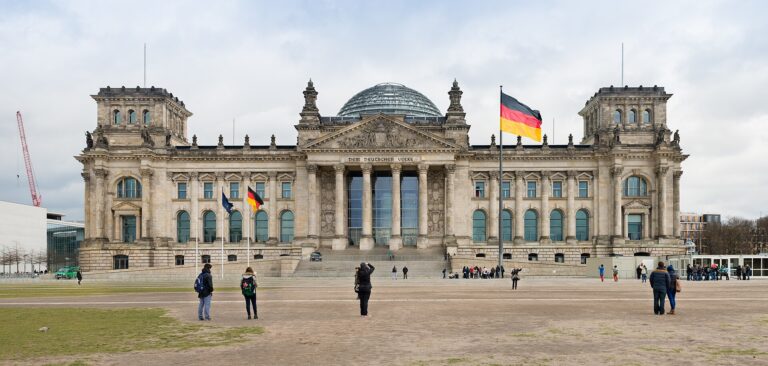
The Bundestag is expected on Thursday to pass a legislative amendment that provides for gradual tobacco tax increases from 2027 and thus significantly higher cigarette prices. The Bundestag's finance committee approved the draft on Wednesday, as the Berliner Morgenpost reports. Approval in the plenary is considered very likely; the Bundesrat could lodge an objection on Friday – which, according to the Berliner Morgenpost and t-online, is considered virtually out of the question.
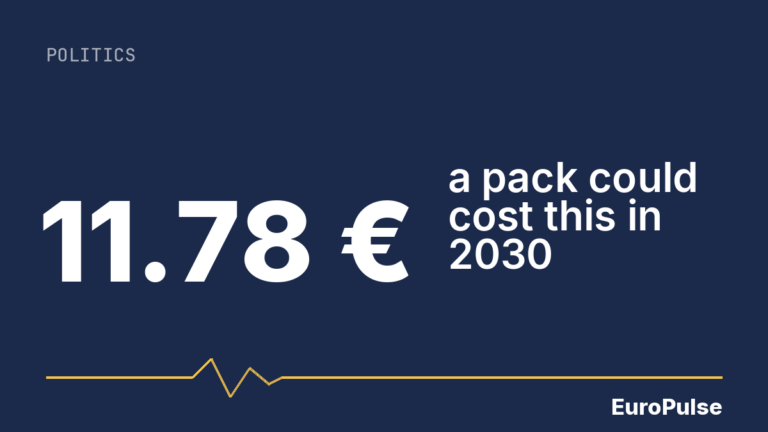
According to calculations based on the legislative proposal, an average price of 9.10 euros for a 20-pack is forecast for next year. In 2028 it is to be 9.91 euros, in 2029 10.81 euros and in 2030 finally 11.78 euros, as t-online and the Berliner Morgenpost report. The average pack price in summer 2026 was 8.05 euros. Brand cigarettes could cost up to 14 euros; their price is currently below 10 euros.
The federal government justifies the plan with tight coffers – it is a necessary step to consolidate the budget. It also serves to protect public health. Last year the tax authorities collected 17.6 billion euros in tobacco tax. In 2027, the tax increase will bring 1.5 billion euros more into the coffers than without the increase, according to the Federal Ministry of Finance. According to the forecast, the additional tax revenue will rise year by year, reaching 4.5 billion euros in 2030.
What the increase means for fine-cut tobacco and other products
It will also become significantly more expensive for users of fine-cut tobacco, i.e. roll-your-own cigarettes. Currently a 30-gram pack of fine-cut tobacco is available for six to eight euros; it contains about twice as much tobacco as a pre-made 20-cigarette pack. According to a statistic, the weighted average retail price could rise from just over eight euros next year to more than 12 euros in 2030. Cigars, cigarillos and water-pipe tobacco will also become more expensive – but for these products the rise will not be as steep as was at times considered in the legislative process.
The federal government had already adopted a draft law in July providing for annual increases in tobacco tax from 2027. The CDU/CSU and SPD tightened it up in an amendment – the draft provides for a stronger increase in tobacco tax than planned by the government, as the Morgenpost reports.
Cancer researchers in favour of the increase, tobacco lobby warns of the black market
Cancer researchers are in favour of the tax increase – they hope for a deterrent effect of high prices and for smokers to quit their cigarette consumption. “A tobacco tax increase is the most effective single measure to motivate people to stop smoking,” says Katrin Schaller of the German Cancer Research Centre (DKFZ). The tax increase does not necessarily mean that illegal trade will rise. Supply chains should be monitored and customs strengthened, says Schaller. “If that is supported more, the black market should be manageable.”
The tobacco lobby is not enthusiastic about the plans. Michael von Foerster of the Association of the German Smoking Tobacco Industry (VdR) says: “When classic cigarette packs become more expensive, many smokers switch to fine-cut tobacco to spare their wallets.” Now, however, fine-cut tobacco is becoming much more expensive and the price gap to cigarette packs is shrinking. “As a result, many smokers will not switch from legal cigarettes to fine-cut tobacco, but from legal cigarettes to illegal cigarettes – our legal companies lose customers and the tax authorities lose taxpayers; the winner is organised crime.”
Jan Mücke of the Federal Association of the Tobacco Industry and Novel Products (BVTE) speaks of “completely unrealistic castles in the air”. Many consumers will migrate to the black market and obtain illegal cigarettes in backyards or buy them in other EU countries, he says, referring to a study by the consultancy DIW Econ, which analysed similar tax increases in other EU states and concluded that black-market effects are also looming in Germany. The Federal Ministry of Finance, in turn, argues that there is no independent empirical data on switching to the illegal market. The authority also stresses that customs counteracts such illegal activities with controls.
The Green Bundestag member Johannes Wagner considers the tax increase right, albeit too weak and “unambitious” – if it were higher, more people would stop smoking. Wagner also criticises that the government is not concerned with health protection but with pure budget consolidation. “The government is tapping the tobacco tax to plug budget holes.” The Left party Bundestag member Doris Achelwilm is also critical, seeing people on low incomes as particularly affected. “We are dealing with a further burden at the bottom that will not save the budget and will hardly improve the health-policy record.”
Millions of people in Germany reach for a cigarette. The 2025 microcensus found a smoker share of 19 per cent of those aged 15 and over: 14 per cent smoke regularly according to their own statements and five per cent occasionally. According to the German Cancer Research Centre, around 131,000 people in Germany died in 2023 as a result of tobacco-related diseases.