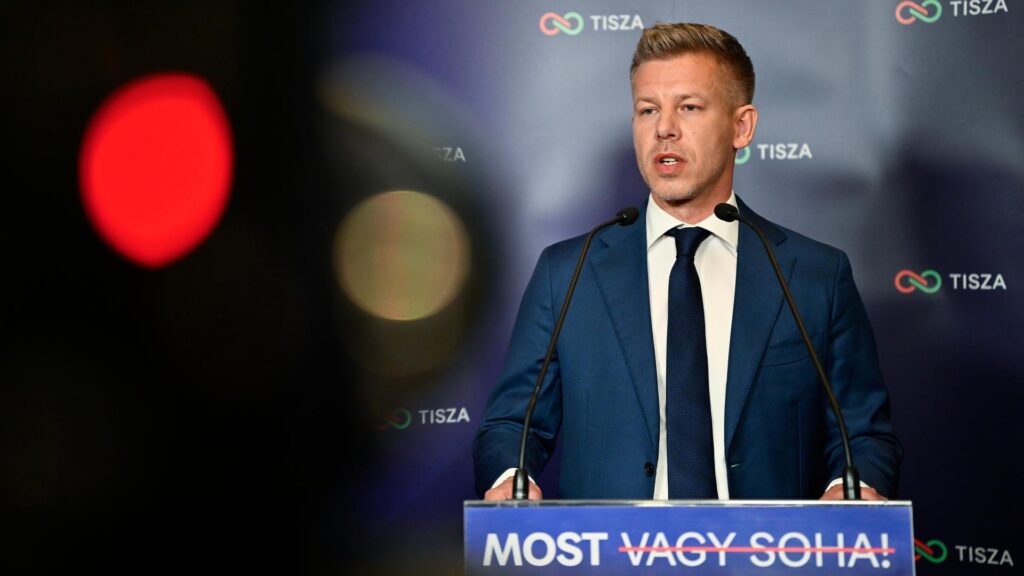
As Deutschlandfunk reports, the Tisza Party, led by Péter Magyar, has won the parliamentary election in Hungary by a significant margin. The party could work towards a two-thirds majority in Parliament, which would enable it to reverse many of the decisions made by the previous government under Viktor Orbán. This election marks a significant turning point in Hungarian politics, as the Tisza Party offers a clear alternative to the existing political structures.
Péter Magyar, who is being considered as the future Prime Minister, has distinguished himself in his political career by taking a clear stance against the measures of the Orbán government. His party, the Tisza, advocates for a series of reforms aimed at strengthening democracy in Hungary and ensuring the independence of the judiciary. Magyar has emphasized his intention to combat corruption and increase transparency in government.
The Tisza Party has focused on issues such as social justice, education, and healthcare during its campaign. Magyar has stated that he aims to improve the quality of life for citizens and reduce inequalities in the country. This could represent a departure from the previous political priorities of the Orbán government, which has often been criticized as authoritarian.
A central concern for Magyar is the restoration of trust in political institutions. He has announced plans to intensify cooperation with the European Union (EU) to reintegrate Hungary into the community of European states. This could also impact Hungarian foreign policy, which under Orbán has often been perceived as confrontational.
Voter turnout was high, indicating a strong public interest in political change. The Tisza Party has managed to appeal to a broad electorate that is yearning for an alternative to the existing political conditions. Magyar has emphasized in his speeches that voters have sent a clear message: they want change.
The future government under Magyar will face the challenge of meeting voter expectations while managing political tensions in the country. The opposition will closely monitor how the Tisza Party implements its promises and whether it can carry out the necessary reforms.
The political landscape in Hungary could be fundamentally altered by the electoral victory of the Tisza Party. Magyar is seen as a figure capable of overcoming the divisions within Hungarian society and fostering dialogue between the various political camps. The coming months will be crucial to see how the new government positions itself and what concrete measures it takes to address the country's challenges.