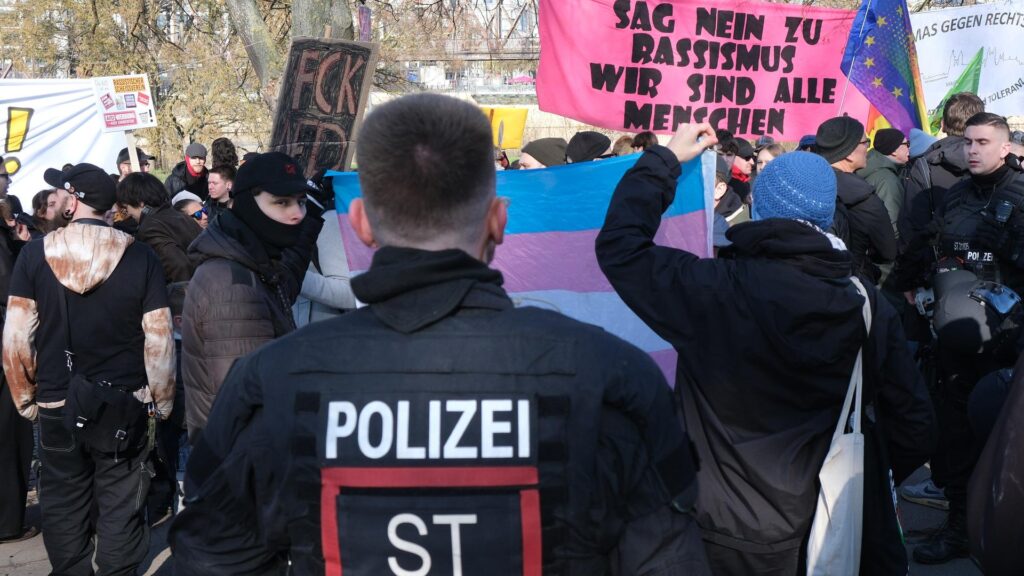
As Deutschlandfunk reports, the AfD state party conference in Magdeburg began under the pressure of protests. These demonstrations were organized by various groups opposing the political positions of the Alternative for Germany (AfD). The protesters demanded a clear distancing from the party's positions, which they perceive as discriminatory and divisive.
In the lead-up to the party conference, the Halle-Dessau Chamber of Commerce expressed strong criticism of the AfD's election program. According to the chamber, the program is incompatible with the interests of the economy in many respects. In particular, the economic policy approaches of the AfD were seen as not viable for the future. The chamber emphasized that constructive cooperation between politics and business is crucial for the development of the region.
The protests outside the venue of the party conference attracted numerous participants, who drew attention to their concerns with placards and chants. The demonstrators called for an open and inclusive society, as well as a policy that considers the interests of all citizens. The atmosphere was characterized by a mix of determination and concern about the political developments in Germany.
The AfD, on the other hand, defended its election program and the associated positions. Party representatives argued that their proposals are necessary to address the challenges of the present. They emphasized that the AfD is a voice for people who feel unrepresented by established politics.
The protests and the criticism from the Chamber of Commerce highlight the tensions that exist in Germany's political landscape. While the AfD seeks to solidify its positions and mobilize voters, many citizens and institutions see the need to resist a policy they perceive as dangerous.
The disputes surrounding the party conference in Magdeburg are another example of the increasing polarization in German politics. Reactions to the AfD and its political proposals will continue to be a central topic in public debate. The coming weeks and months could be decisive for how the political landscape in Germany will develop.