According to its own account, the Ukrainian defence forces attacked two petrochemical facilities in the Russian republic of Tatarstan and a helicopter plant in the Bryansk region in the night to Sunday. This was announced by the General Staff of the Ukrainian Armed Forces on Facebook, as reported by the news agency Ukrinform and the news outlet Ukrainska Pravda.
In Nizhnekamsk, according to the General Staff, the attacks hit the Nizhnekamskneftekhim petrochemical complex, one of the largest petrochemical complexes in Europe and a central production site of the Sibur holding. Explosions were heard on the site, after which a fire broke out. The plant produces synthetic rubbers and plastics, from which, among other things, tyres for military lorries, armoured vehicles and aircraft as well as seals and hoses are made. According to the General Staff, individual types of rubber also serve as binders for solid rocket fuel, as used in Iskander-type ballistic missiles.
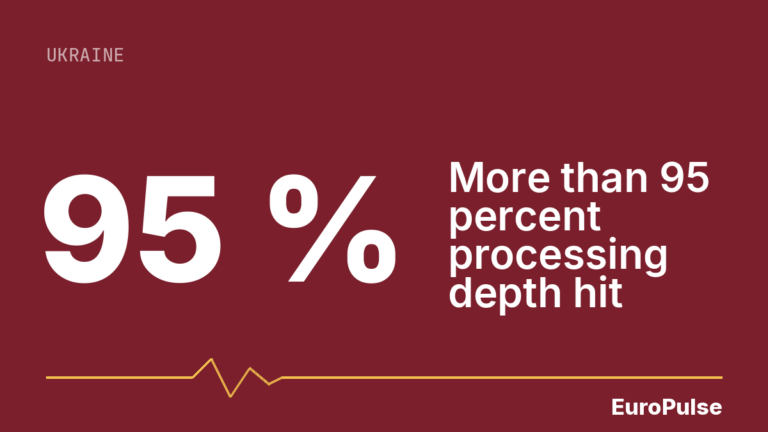
Also in Nizhnekamsk, according to these reports, the only facility for primary crude oil processing, ELOU-AVT-7 of the TAIF-NK refinery, was hit. The plant processes heavy, sulphur-rich oil and gas condensate with a processing depth of more than 95 per cent; its products went both into bulk fuels and into raw materials for the petrochemical industry and military needs. A fire was also detected there. The extent of the damage to both facilities is still being clarified.
According to the General Staff, the third target was the joint-stock company Monolit in Trubchevsk in the Bryansk region. The company specialises in the manufacture of aircraft, including helicopters, as well as spare parts and components, and carries out metalworking.
Mayor reports injuries and evacuations
The mayor of Nizhnekamsk, Radmir Belyayev, said according to the Kyiv Independent, which is published in Kyiv, that the city was the target of a longer-lasting drone attack on Sunday. Industrial facilities and a residential building were damaged. Residents were evacuated and several people were injured. The General Staff did not comment on casualties.
The facilities in Nizhnekamsk had already been the target of Ukrainian attacks with long-range weapons before. On 13 September, the General Staff confirmed attacks on the TANECO refinery in Nizhnekamsk and the Slavyansk refinery in the Krasnodar region; TANECO was also hit on 20 August, as the Kyiv Independent reports, citing the General Staff.
“Every day of standstill reduces Russia’s capabilities”
The General Staff justifies the attacks with the right of self-defence under Article 51 of the UN Charter. Every day such plants stand still reduces Russia’s military capabilities, the statement says. Specifically, according to the Kyiv Independent, the staff formulates: every day these plants stand still means fewer tyres for the vehicles that bring ammunition to the front, fewer rubber parts for armoured vehicles and aircraft, fewer raw materials for the missile industry and less fuel for the Russian military.
The attacks are part of a campaign against Russian defence and energy infrastructure. Only in the night to 13 November, according to Ukrinform, the Neptune coastal missile system of the Ukrainian Navy hit a production facility, a warehouse and a service centre for Russian drones in Rostov-on-Don.
The General Staff’s statements cannot be independently confirmed. Russian authorities did not comment on the hits in the reports available; the Ukrainian statements on damage and injuries come from the Ukrainian military leadership and the mayor of Nizhnekamsk. For the editorial assessment, the following applies: the range of the Ukrainian drones as far as the Tatarstan region shows that targets deep in the Russian hinterland remain reachable – whether production will actually be impaired in the longer term can only be seen in the coming weeks.