At least 438 Ukrainians have died in Russian captivity, according to a report by the UN Special Rapporteur on the human rights situation in Russia, Mariana Kacarova, which the Ukrainian news agency Ukrinform published on Tuesday, 3 November, and which the news outlet Ukrainska Pravda reported on Thursday. Kacarova relies on data from the Ukrainian Coordination Staff for the Treatment of Prisoners of War. Torture and ill-treatment of prisoners are systematic in Russia and part of the Kremlin’s state policy, Kacarova said.
The report is intended for the UN General Assembly. According to Ukrainska Pravda, Kacarova also explained it in an interview with Ukrinform; the Ukrainian Human Rights Commissioner Dmytro Lubinets spread the key findings via his Telegram channel and is quoted by the news agency Interfax-Ukraine.
Beatings, electric shocks, sexualised violence
Beatings, sexualised violence and electric shocks were standard practice in Russian prisons, Kacarova said. Even medical staff in the detention facilities were involved in the ill-treatment and helped to cover up traces of torture. The perpetrators largely remained unpunished – “sometimes the torture of Ukrainian prisoners can even be a reason for promotion,” she told Ukrinform. The “torture machine” was working “at full capacity”.
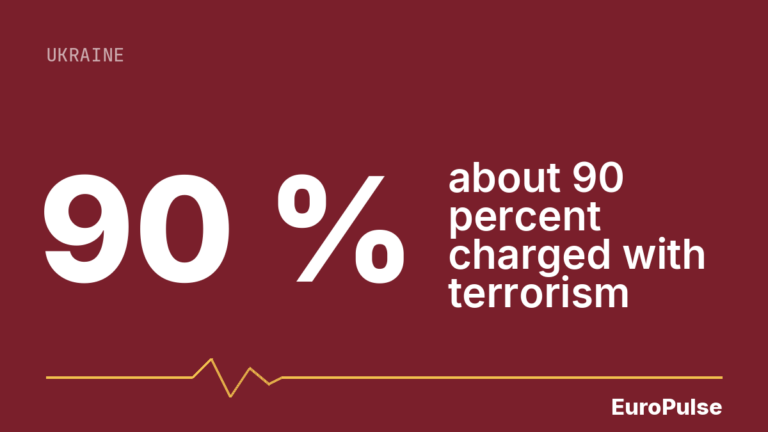
A central accusation in the report concerns legal practice: Russia does not recognise captured Ukrainian soldiers as combatants and puts them on trial en masse on fabricated terrorism charges. According to Kacarova, about 90 per cent of prisoners whose cases go to Russian courts are charged with terrorism – a clear violation of the Geneva Conventions. Prisoners of war may be held accountable for their participation in hostilities, but they must not be regarded as terrorists solely because of their military service, she stressed.
Between September 2025 and August 2026, according to the report, Russian courts convicted at least 585 Ukrainians in politically motivated proceedings – 226 civilians and 359 military personnel. Those named include the captured fighter of the “Azov” brigade Dmytro Zelisar, who was sentenced to 18 years in prison, and his fellow fighter Mykola Kuzmenko, whose sentence was increased to 27 years.
169 bodies transferred to Ukraine – autopsies show traces of torture
Between May 2025 and May 2026, the bodies of 169 fallen military personnel and civilians were returned to Ukraine, the report says. Autopsies found traces of torture and failure to provide medical assistance as the immediate causes of death.
The document deals separately with the death of the Ukrainian journalist Viktoriia Roshchyna in Russian captivity. According to the Ukrainian government, as of June 2026 a total of 1,877 civilians had been identified in Russian prisons. Since the start of the invasion, 9,446 people have returned from captivity, including only 457 civilians.
Kacarova also describes individual cases of women. Natalia Vlasova, for example, testified before a military court in Rostov that a group of 15 members of armed formations of the self-proclaimed “DNR” had raped her, tortured her with electricity and sawed off her teeth with a metal file. Instead of opening proceedings, the judge sentenced her to 18 years and two months in prison; she is now in a Russian colony. “I have a list of two dozen women, but in reality there are far more,” Kacarova said.
Which mechanisms could hold those responsible to account
As ways to achieve accountability, Kacarova named the International Criminal Court and the principle of universal jurisdiction, which allows states to open proceedings against individual perpetrators of international crimes. This requires funding, political will and resources. She does not expect the Russian authorities to clarify these deaths.
Lubinets demanded that every crime against Ukrainian prisoners of war and civilians be documented. “Every executioner, every organiser of illegal persecution, everyone who deliberately covers up these crimes must be held accountable,” he said, according to Interfax-Ukraine.
The report comes at a time when external control of detention facilities in Russia is continuing to erode. As the Tagesspiegel, citing dpa, and the Austrian broadcaster ORF reported on Monday, 2 November, Russia has officially withdrawn from the European Anti-Torture Convention. According to the Council of Europe, this ends independent monitoring of Russian prisons by the Anti-Torture Committee in Strasbourg. Between 1998 and 2021, the body visited 450 places of detention on 30 trips; however, according to the two media outlets, it published reports on the visits for only four of them, because Russia was the only country that almost never permitted this. Moscow justified its withdrawal by saying it could no longer participate in the committee.
The Tagesspiegel also refers to statements by the Ukrainian Human Rights Commissioner, according to which Russia has subjected Ukrainian prisoners to 695 different forms of torture, including physical and psychological ill-treatment and sexualised violence; the government portal “united24media” reports on this. Back in August 2024, the UN Monitoring Mission for Ukraine found that more than 95 per cent of Ukrainian prisoners of war in Russian prisons had been tortured. In April 2025, an international investigation involving Ukrainska Pravda found at least 29 Russian colonies and pre-trial detention centres with systematic torture of Ukrainian prisoners under the direct supervision of the FSB. In September 2025, the UN High Commissioner for Human Rights published a report according to which more than 90 per cent of Ukrainian civilians in captivity had been tortured and dozens died in isolation without help.
Editor’s note: The report is a United Nations document; the figure of 438 deaths comes from Ukrainian authorities. An independent review by Russian bodies is not to be expected, according to Kacarova’s assessment.