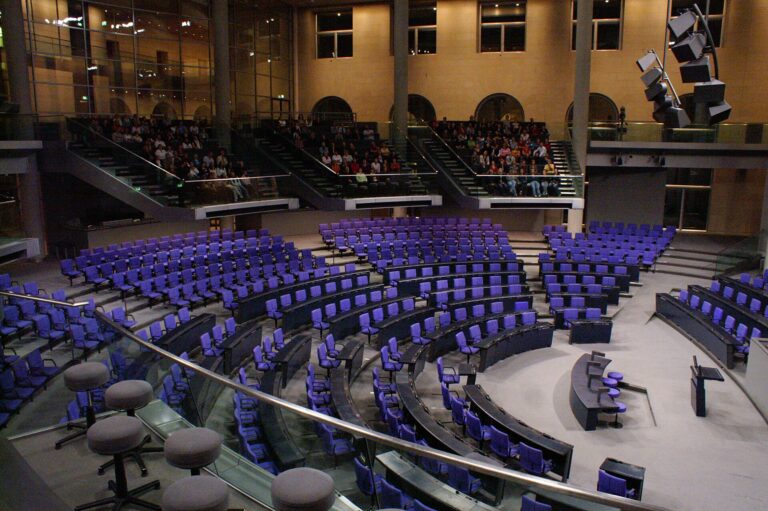
The Bundestag debates the care reform for the first time this Thursday. Long-term care insurance faces a €7.5 billion shortfall next year, tagesschau.de reported on Thursday, 5 November; the health ministry had previously assumed €6 billion.
According to the report, the law is to make long-term care insurance more expensive for people without children: the contribution rises to 0.9 per cent. In addition, the contribution assessment ceiling is to be raised by €300, so higher earners pay more. Various benefits are to be re-sorted and partly merged. Cuts are also planned: in care level 1, the so-called relief contribution of up to €131 a month is to be dropped. Overall, it will become more difficult to be classified as in need of care at all or to receive a higher care level.
Unlike originally planned, however, the care insurance intends to continue paying the full pension insurance contributions for caring relatives. Linnemann called this a particular concern, according to tagesschau.de: “We must not allow them to receive fewer pension points than if they were working in administration or in business, comparatively.”
85 per cent are cared for at home
Without caring relatives, the care system would not function: the vast majority of people in Germany are cared for at home, around 85 per cent. For families, this is often a burden lasting for years. tagesschau.de profiles Angelina Kusterer, who has cared for her mother, who has multiple sclerosis, around the clock for 15 years, gave up her job to do so and receives basic security. “I would wish that the whole thing would finally stop. This fear: what is tomorrow, what is the day after tomorrow? And that we don’t have to live constantly at the subsistence minimum,” she says in the ARD documentary “Pflegende Angehörige am Rande der Erschöpfung” (Caring relatives on the brink of exhaustion).
Linnemann said of these people: “These are people who are not in the public eye every day. Who work in the shadows and who hold our society together.” At the same time, he announced savings: “We will have to make savings.” Income and expenditure must be brought into balance, he said.
First aid instead of structural reform
According to tagesschau.de’s assessment, the law is at most a kind of first-aid measure for long-term care insurance. Even if the Bundestag passes it, it will not be enough to get the finances under control. The SPD health politician Christos Pantazis told the broadcaster: “Against this background, we need a second law. Because: care suffers from a structural financing problem, and we must address that. I make no secret of it: Social democracy would have done it in one go.” However, according to tagesschau.de, the black-red government could not agree on that. While the MPs debate the first part, a commission of experts is drawing up proposals for a comprehensive structural reform. Linnemann wants to see results by the end of January: “But I think it is not rocket science either. And then we as politicians must also have the courage to implement these things as far as possible.” In view of the financial worries, he did not want to rule out further cuts.
According to the Stuttgarter Nachrichten, the timetable is subject to reservation: the cabinet had already adopted the draft of the Care Reorganisation Act on 30 September. After the first reading on 5 November, the draft is to be discussed in the committees, with a public hearing planned for 11 or 25 November. The second and third readings in the Bundestag are scheduled for 11 December, and the Bundesrat is to deal with the law on 20 November and, after adoption, again on 18 December. The start is staggered: on 1 January 2027, among other things, the childless surcharge is to rise from 0.6 to 0.9 percentage points; on 1 January 2028, contributions for employers for mini-jobs and a surcharge for certain co-insured spouses are planned; on 1 January 2029, a new care guidance and an annual adjustment of benefits to core inflation.
The social association VdK had already called at the end of October for a clear rejection of benefit cuts. “People in need of care and their relatives need reliability and not the certainty that cuts will be made anyway in the end,” President Verena Bentele told the Rheinische Post, as reported by the Süddeutsche Zeitung. Being in need of care is not a luxury, “it strikes people without warning, after a stroke, a dementia diagnosis or an accident”. The board of the German Foundation for Patient Protection, Eugen Brysch, warned against cuts in home care: if this largest care service collapsed, hundreds of thousands of people would additionally have to be cared for in care homes, but places and staff were already lacking there.
Editor’s note: The reform has not yet been adopted. The dates mentioned are plans and may be postponed.