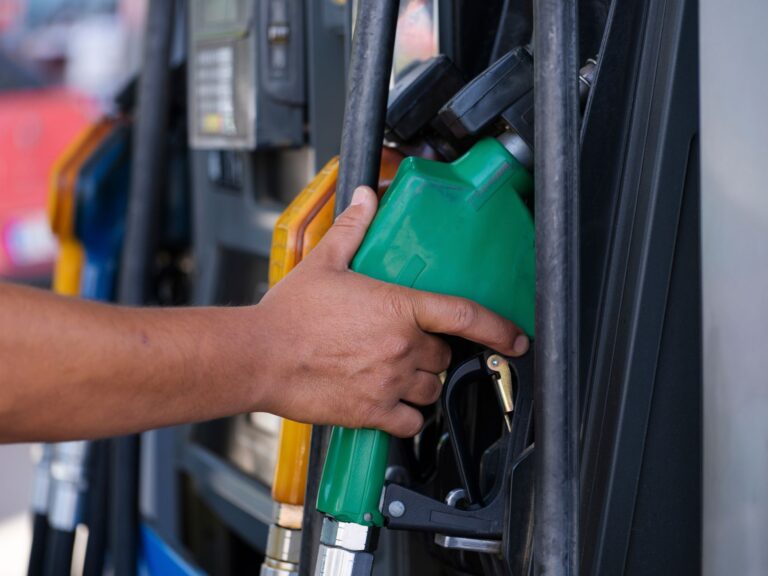
Federal Economics Minister Katherina Reiche (CDU) has presented a draft law for a price cap on petrol and diesel, which is available to Handelsblatt. According to the draft, the law does not introduce the cap automatically, but initially only creates the legal basis for it.
A few weeks ago, the federal government and the federal states agreed to introduce a nationwide cap in order to limit the high prices for petrol and diesel as a result of the Iran war. According to Handelsblatt, the plans from Reiche’s ministry fall far short of what the SPD in particular envisages for a new regulation.
The most important restriction: only if petrol and diesel are each more than five percentage points above the average price increases of the other EU states for three consecutive weeks can the federal government activate the price cap. There would be a separate maximum price for petrol and for diesel. According to the draft, the law is to enter into force on 1 January 2027. The review of whether a maximum price is to be introduced begins with the data from the second full week of January.
In September, the black-red coalition agreed that Reiche’s economics ministry should draw up a price cap from January. Until the end of the year, the fuel discount, which lowers taxes on petrol and diesel, will still apply. After that, a cap is to ensure lower prices at the pumps. The SPD in particular had pushed for this.
However, Reiche had made no secret from the outset that she does not support such a measure. Her ministry said that setting an appropriate nationwide price cap was hardly feasible. At the same time, too high a cap would even lead to higher prices. Too low a price cap, on the other hand, could jeopardise security of supply, for example in more remote regions, because business there would then no longer be worthwhile.
Referring to security of supply, the coalition agreement expressly states that the fuel price cap is to be developed together with the mineral oil industry. However, the industry refused to cooperate on a voluntary cap, as n-tv.de reports, citing the portal Politico. Coordination between associations and companies could be regarded as an “impermissible price-fixing agreement”, Politico quoted on Thursday from a letter from the managing directors of bft, en2x, MEW and UNITI to the Federal Ministry for Economic Affairs. For legal reasons, the associations could also not participate in a coordinating capacity. According to Politico, the letter goes on to say: “Overall, we see no model for a price cap that appears suitable for the German fuel market.”