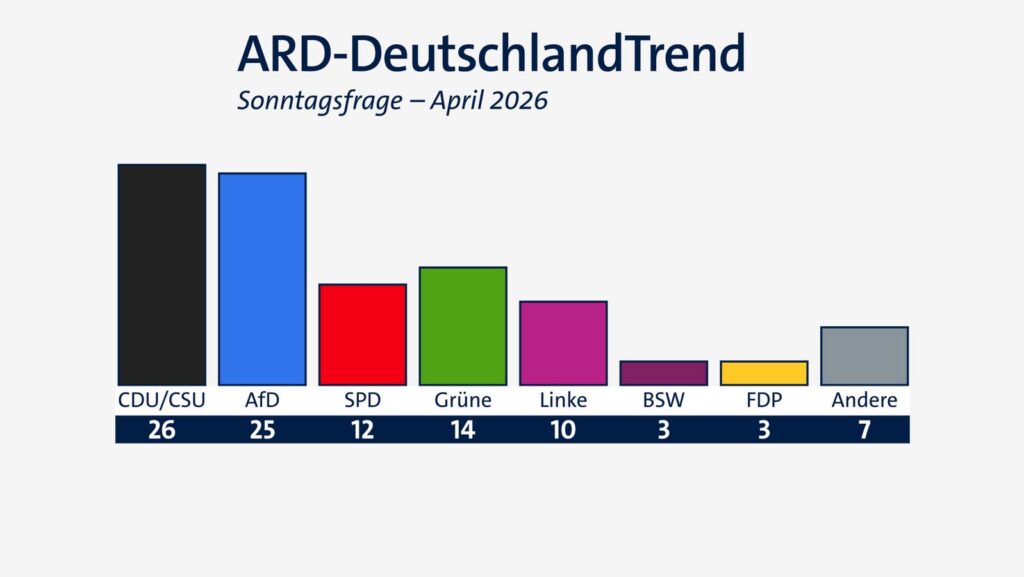
Recent polling data from the ARD-DeutschlandTrend reveals significant shifts in Germany's political landscape. If a federal election were to take place this Sunday, the Union would narrowly lead with 26%, just ahead of the AfD, which stands at 25%. In stark contrast, the SPD has seen its support drop to a concerning 12%, reflecting the party's weakest performance in years. This trend underscores growing voter dissatisfaction with the current government led by the SPD.
The survey not only highlights the changing preferences of voters but also indicates a decline in the personal approval ratings of Chancellor Friedrich Merz and Vice Chancellor Lars Klingbeil. Both leaders are grappling with diminishing trust in their leadership. While Merz represents the Union, Klingbeil faces challenges directly impacting his party, the SPD.
In recent months, the SPD has lost both popularity and political clout, a trend that mirrors public dissatisfaction with the government's performance. This decline could have serious implications for the political strategies of both major parties as they seek to regain lost trust.
The AfD, recognized as a right-wing populist party in Germany, appears to be capitalizing on this discontent. Its rise in the polls has the potential to significantly alter the political landscape, compelling other parties to engage more seriously with the issues it raises. The Union may also feel pressured to reassess its political agenda to win back voters.
Overall, the survey indicates that citizens are increasingly seeking alternatives, posing new challenges for established parties. The coming weeks and months will be crucial to observe how these trends evolve and what measures the parties will take to connect with their constituents. Developments in Germany's political climate hold significance for the broader European political landscape and could have far-reaching consequences.