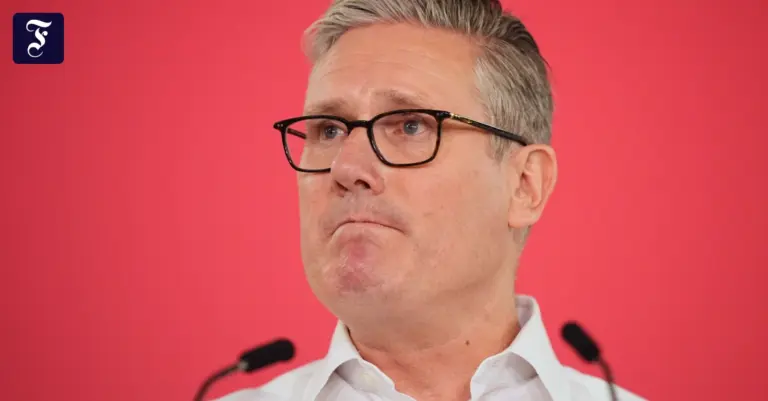
Following significant losses for the Labour Party in the local and regional elections in the United Kingdom, Prime Minister Keir Starmer has lost support within his party. By Monday evening, more than 70 Labour MPs had called for his resignation, according to FAZ. Among the critics are Foreign Secretary Yvette Cooper and Home Secretary Shabana Mahmood, who urged Starmer to facilitate an orderly transition of power.
Four government staff members resigned in protest against Starmer. Melanie Ward, a former employee of the Foreign Office, stated that while Starmer had reformed the party, he had lost public trust to lead this change. For an internal party vote to remove Starmer, 81 of the total 403 Labour MPs would need to express no confidence in the Prime Minister.
The elections on Thursday in England, Scotland, and Wales saw gains for the right-wing populist party Reform UK as well as the Greens, while Labour lost hundreds of seats in its strongholds. Starmer is therefore under immense pressure. He acknowledged that many people are frustrated with the state of the UK and its politics.
Starmer announced that he wants to prove the opposite to the public and that "gradual changes" are no longer sufficient in light of the widespread dissatisfaction. He promised a "more comprehensive response" and improvements through closer ties with the European Union (EU). He also announced measures in energy and economic policy, including legislation for the complete nationalization of the steel company British Steel.