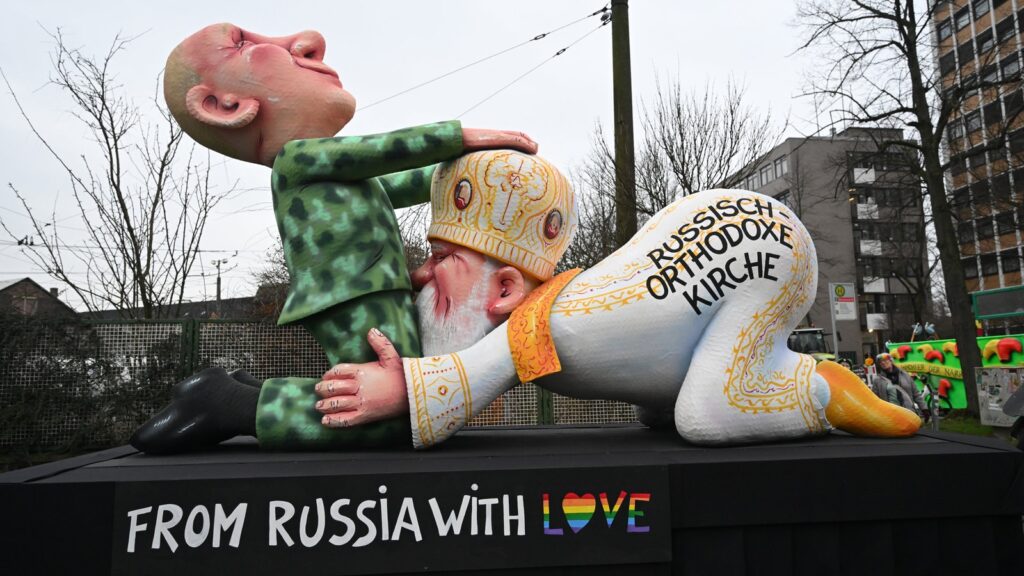
In Moscow, the trial of German artist Jacques Tilly, known for his provocative carnival floats, is drawing significant attention as a verdict is expected today. Tilly is accused of offending President Vladimir Putin and violating the religious feelings of the public through his artistic expressions that sharply criticize the Russian leadership.
The trial, which has gained prominence since Russia’s invasion of Ukraine, poses a direct challenge to freedom of expression in the country. Tilly, who satirizes the Russian elite with his carnival creations, now faces serious legal repercussions. Several witnesses have already testified in previous sessions, and new testimonies are anticipated today.
Tilly has repeatedly described the charges as absurd, labeling the proceedings as “ridiculous.” In an interview with N-tv, he expressed disbelief that art could be considered a crime, highlighting the troubling trend of silencing dissenting voices in Russia.
Today’s court session could be pivotal, determining whether Tilly faces imprisonment or is acquitted. The outcome will not only impact Tilly but also resonate with other artists and critics in Russia operating in an increasingly repressive environment.
The international community is closely monitoring the trial, as it underscores the tension between artistic freedom and state control. In a time when free speech is under siege globally, the verdict could have far-reaching implications for the creative landscape in Russia and beyond.
If Tilly is convicted, it may send a chilling message to fellow artists to steer clear of political themes to avoid legal troubles. Conversely, an acquittal could be seen as a beacon of hope for freedom of expression in a country where it is increasingly curtailed. Reactions to the verdict are eagerly awaited both within Russia and internationally.
said Tilly. The procedure is ridiculous.
Freies Russland NRW — N-tv