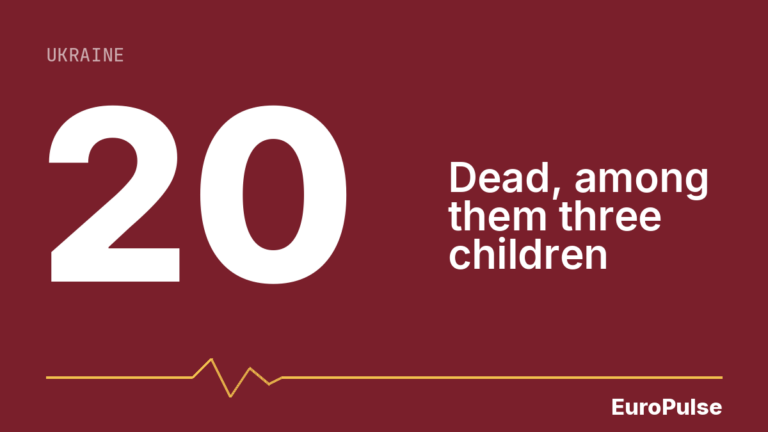
A Russian glide-bomb attack on a residential building in Zaporizhzhia has killed 20 people, including three children. That was reported by Ukraine's state emergency service (DSNS) on Saturday, 10 October. 18 people were injured, among them also three children. Rescue workers freed three people from the rubble, and DSNS psychologists provided support to 35 residents. The recovery work continues.
On the morning of 10 October, according to Ukrainian authorities, Russian forces attacked a five-storey residential building in Zaporizhzhia with guided glide bombs. Initially, eight deaths were reported, later 17, before the DSNS corrected the figure to 20 on Saturday.
An attack that follows an agreement
The attack falls on the day after US President Donald Trump announced, by his own account, an agreement to purchase Russian diesel. Trump wrote on Friday that Russia would immediately supply more than 300,000 tonnes of diesel, a further 500,000 tonnes in November and then one million tonnes. Another three million tonnes were to follow “within a short time”. Ukrainian President Volodymyr Zelenskyy responded on Saturday on the platform X with the words: “Today Russia expressed its gratitude for the lifting of sanctions on diesel exports by dropping five glide bombs on residential buildings in Zaporizhzhia.” Every easing of pressure is understood by Moscow as permission to continue fighting and to keep dropping bombs on cities. “Russia’s choice is war,” Zelenskyy later wrote on Telegram. Every additional billion that Russia earns through exports finances weapons components, drone upgrades, missile production and the recruitment of mercenaries. Moscow will only stop when its ability to fight dwindles.
Zelenskyy said Ukraine was coordinating steps to counter Russia’s additional revenues. With French President Emmanuel Macron, he discussed strengthening air defence and warned of an increased risk of further missile attacks in the coming days. He also discussed the situation with Finnish President Alexander Stubb. In the coming days, Ukraine is to receive ammunition for the F-16 fighter jets with which it intercepts Shahed drones.
Attacks also on Kyiv and other regions
On Saturday, according to authorities, missiles also struck Kyiv. Mayor Vitali Klitschko said four people were injured. The attacks on the capital took place in broad daylight. In total, according to the Ukrainian side, more than 60 people have been killed by Russian bombardments over the past four days. Russia and Ukraine have been at war for more than four and a half years; there is hardly any movement at the front, but an intense long-range air war.
The attacks on Zaporizhzhia are part of a series. Russian drones had already hit the city on 20 September; according to the DSNS, two nine-storey residential buildings were damaged, a shopping centre burned, and eight people were injured. A building of Zaporizhzhia National University, built in 1902, was severely damaged. On 10 August, a Russian glide bomb attack injured at least 26 people, including three children, according to the head of the regional military administration, Ivan Fedorov. The city has thus been under repeated shelling for months.
Editor’s note: The casualty figures come from the Ukrainian emergency service and may change as recovery work progresses. The assessment that the diesel deal strengthens Russia’s ability to attack comes from President Zelenskyy; there is no independent confirmation of it.
Earlier coverage: Zaporizhzhia: Eight dead in glide-bomb attack, including three children